
॥ Shiva Ashtakam ॥
Eight Verses in Praise of Lord Shiva
Attributed to Adi Shankaracharya
Verse 1
Prabhuṃ prāṇanāthaṃ vibhuṃ viśvanāthaṃ
Jagannāthanāthaṃ sadānandabhājam
Bhavadbhavyabhūteśvaraṃ bhūtanāthaṃ
Śivaṃ śaṃkaraṃ śambhumīśānamīḍe
Meaning: I praise Lord Shiva — the Supreme Lord, master of life-force, all-pervading, Lord of the Universe! Master of even the Lord of the cosmos (Vishnu), ever dwelling in supreme bliss! Lord of all that exists and all that shall exist, ruler of all beings — that auspicious Shiva, the giver of peace, the source of happiness, the ruler of all — him I praise!
Verse 2
Gale ruṇḍamālaṃ tanau sarpajālaṃ
Mahākālakālaṃ gaṇeśādipālam
Jaṭājūṭabhaṃgotthitāgaṃgātaraṃgaṃ
Śivaṃ śaṃkaraṃ śambhumīśānamīḍe
Meaning: Around his neck, a garland of skulls; upon his body, serpents coiled; he who is the time beyond even great Time (Mahakala); the protector of Ganesha and all divine beings; from whose matted locks flow the waves of the sacred Ganga — that Shiva, the peaceful giver, the source of all auspiciousness, the supreme ruler — him I praise!
Verse 3
Mudāmākaraṃ maṇḍanaṃ maṇḍayantaṃ
Mahāmaṇḍalaṃ bhasmabhūṣādharaṃ tam
Anādihy apāraṃ mahāmohamāraṃ
Śivaṃ śaṃkaraṃ śambhumīśānamīḍe
Meaning: He who is the very source of joy, who adorns himself with ornaments — adorning the great world itself; who wears sacred ashes as his only adornment; who is without beginning, without end, who destroys the great delusion of existence — that Shiva, peaceful, auspicious, supreme — him I praise!
Verse 4
Vaṭādhonivāsaṃ mahāṭṭāṭṭahāsaṃ
Mahāpāpanāśaṃ sadāsuprakāśam
Girīśaṃ gaṇeśaṃ sureśaṃ maheśaṃ
Śivaṃ śaṃkaraṃ śambhumīśānamīḍe
Meaning: He who dwells under the banyan tree (as the eternal teacher in the story of Dakshinamurti); whose cosmic laughter is tremendous; who destroys the greatest sins; who is ever brilliantly self-luminous; Lord of mountains (Girisha), Lord of divine beings (Ganesha), Lord of gods (Suresha), the Great Lord (Mahesha) — that Shiva, peaceful, auspicious, the supreme ruler — him I praise!
Verses 5–8 (Summary of Key Images)
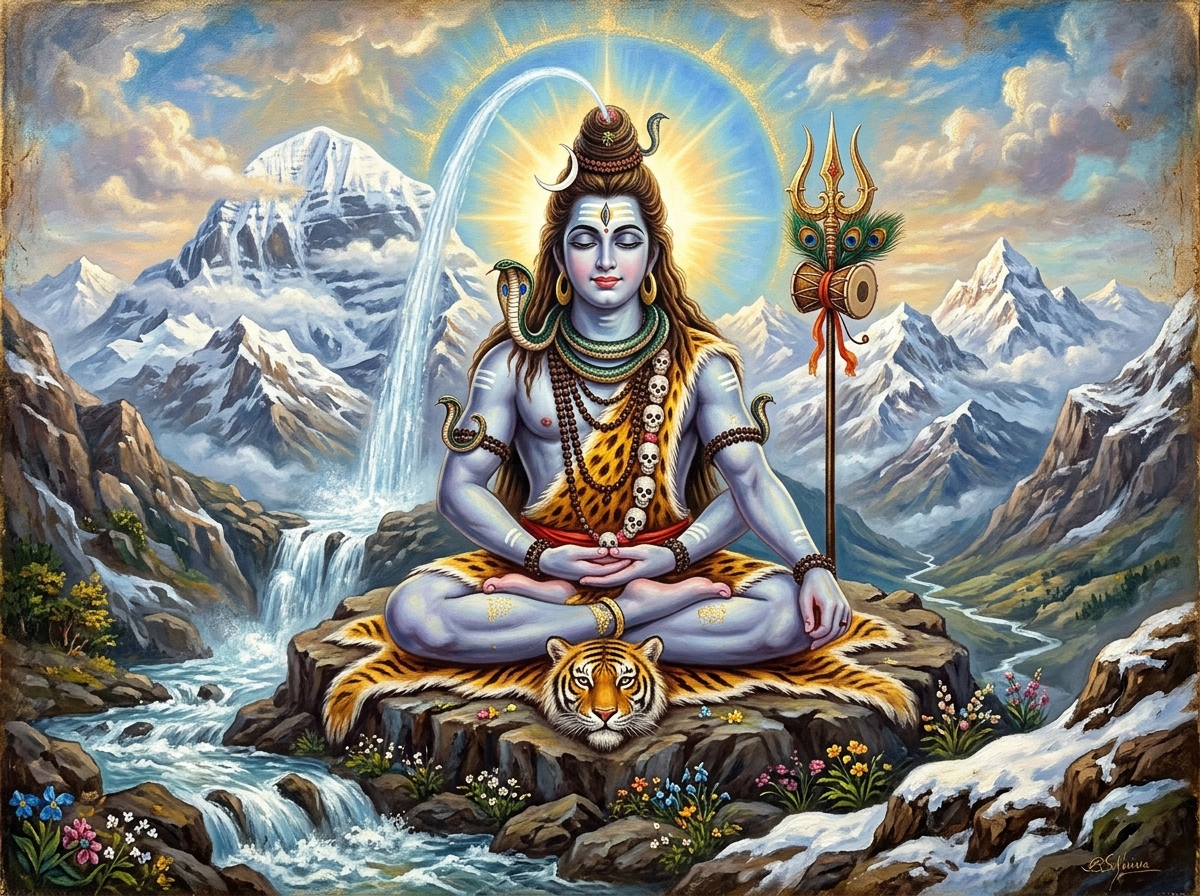
Verse 5 praises Shiva as the eternal Yogi — seated in deep meditation on Mount Kailash, smeared with ashes, surrounded by his divine attendants, holding the trident of three realms.
Verse 6 praises Shiva as the cosmic dancer — whose Tandava dance sustains the rhythm of the universe; at whose feet the demon of ignorance (Apasmara) is suppressed; from whose hair the Ganga descends to bless the world.
Verse 7 praises Shiva as the great physician — the Vaidyanath who heals all disease; who drank the cosmic poison Halahala to protect the universe; whose blue throat (Nilakantha) is the mark of his self-sacrifice.
Verse 8 (Concluding verse) praises Shiva as beyond all description — yet approachable through sincere devotion; the one consciousness that appears as many; the final refuge of all who seek liberation.
The Concluding Phala Shruti
Imaṃ stavaṃ bhaktyā paṭhet sarvadā
Śivaprasādena sa muktimāpnuyāt
Meaning: Whoever recites this prayer with sincere devotion always — by the grace of Lord Shiva, they shall attain liberation.
Significance of Ashtakam (Eight Verses)
The number eight (ashta) is deeply significant in Hindu symbolism:
- Eight directions of space
- Eight forms of Shiva (Ashtamurti): Earth, Water, Fire, Wind, Space, Sun, Moon, and the Sacrificer
- Eight limbs of yoga (Ashtanga Yoga)
- Eight forms of divine wealth (Ashtalakshmi)
An Ashtakam of eight verses thus creates a complete, all-encompassing praise — covering the deity in all dimensions.
When to Recite
- Maha Shivratri — the great night of Shiva (most auspicious)
- Monday — Shiva’s sacred day
- Pradosh Kaal — the twilight period on the 13th lunar day
- Before or after Abhishekam (ritual bathing of the Shivalinga)
- During any period of personal difficulty — invoking Shiva as destroyer of suffering