॥ Jai Jai Durge ॥
A devotional bhajan to Goddess Durga, sung with great fervor during Navratri
Refrain
Jaya jaya Durge, jaya māṃ Durge
Śerāvālī māṃ, jaya jaya Durge
Meaning: Victory, victory to Durga! Victory to you, Mother Durga! O Mother who rides the lion — victory, victory to Durga!
Verse 1
Tuma ho māṃ jagadambe, tuma ho māṃ jagadambe
Karo kṛpā māṃ, jaga kī sambe
Duṣṭa-vināśinī tuma ho māṃ Durge
Meaning: You are the Mother of the universe, O Jagadamba! Have compassion, O Mother, sustainer of the world. You are the destroyer of the wicked, O Mother Durga!
Verse 2
Mahiṣāsura kā nāśa kiyā tumane
Devoṃ kā saṃkaṭa harā tumane
Nau rūpoṃ meṃ pūjī jātī ho tuma
Nau dina kī māṃ tuma ho jagadambe
Meaning: You destroyed the demon Mahishasura! You removed the afflictions of the gods! You are worshipped in nine forms — the Mother of nine days (Navratri), you are Jagadamba!
Verse 3
Tumhāre caraṇoṃ meṃ āyā hūṃ māṃ
Śaraṇa meṃ terī āyā hūṃ māṃ
Pāpoṃ se mukta karo mujhako māṃ
Dayā kī dṛṣṭi karo māṃ Durge
Meaning: I have come to your feet, O Mother! I have come to take refuge in you, O Mother! Free me from my sins, O Mother! Cast upon me your glance of compassion, O Mother Durga!
Verse 4
Sone kā siṃhāsana terā māṃ
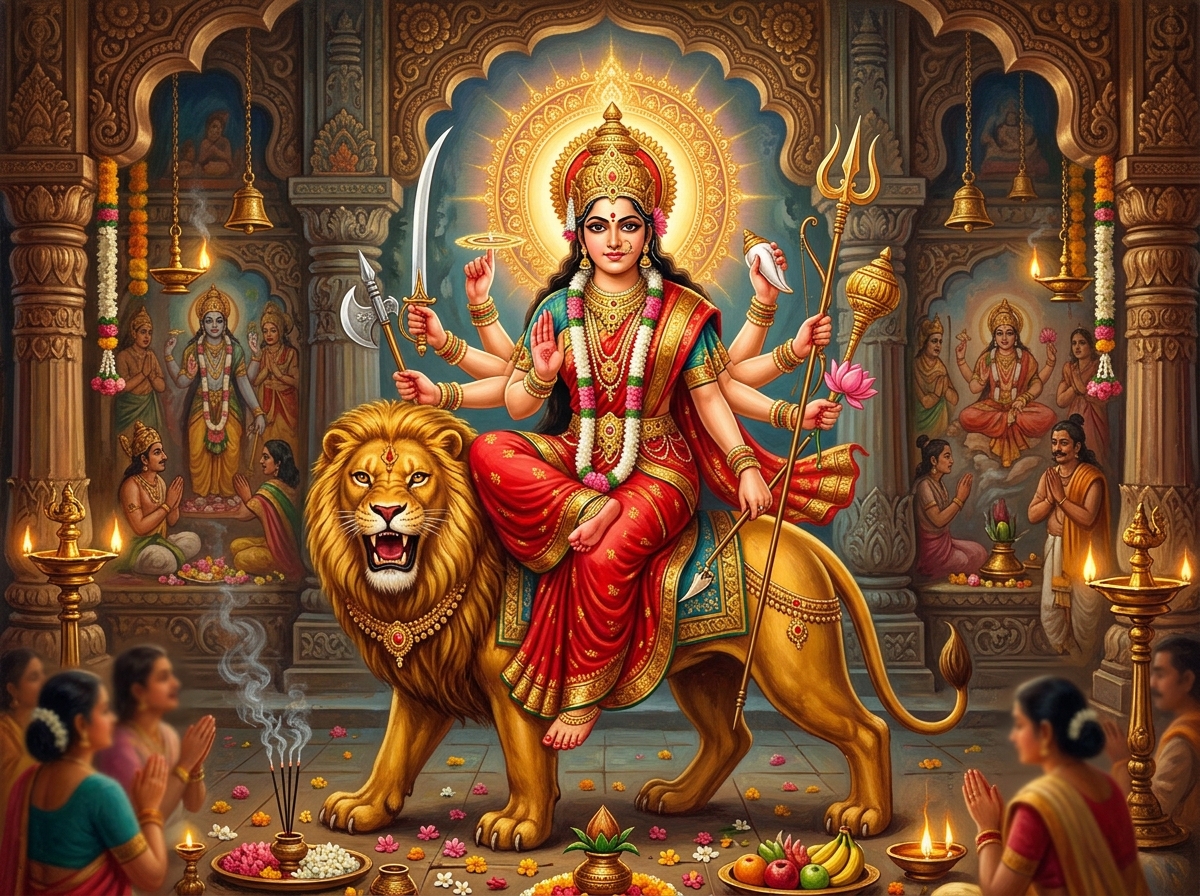
Siṃha para baiṭhī hai ambe māṃ
Dasa bhujāoṃ meṃ śastra dharī ho
Tīnoṃ lokoṃ kī svāminī māṃ
Meaning: Your throne is of pure gold, O Mother! Seated on the lion, O Amba Mother! In your ten arms you hold divine weapons. You are the ruler of all three worlds, O Mother!
Verse 5 (Concluding)
Navarātri meṃ pūjā karate haiṃ
Tere guṇa saba gāte haiṃ
Māṃ kī jyota jalāte haiṃ hama
Jaya jaya Durge gāte haiṃ hama
Meaning: During Navratri we perform your puja! All sing your glories! We light the flame of the Mother! And sing “Jai Jai Durge” with all our hearts!
Sherawali Mata — The Lion-Riding Mother
The epithet “Sherawali Mata” — the Mother who rides a lion — is one of the most beloved titles of Goddess Durga across all of northern India. The Goddess Vaishno Devi shrine in Jammu, one of the most visited pilgrimage sites in India, is known as the abode of Sherawali Mata.
The lion (simha) is the vehicle (vahana) that reveals her nature:
- Power without cruelty — the lion is mighty but does not kill without reason
- Dignity — the lion moves with natural majesty
- Freedom — no cage can contain the lion
- Courage — the lion fears nothing
When the Goddess mounts the lion, she demonstrates that true power serves righteousness, not selfish desire.
Navratri Garba and Dandiya
The bhajan Jai Jai Durge is often sung during Garba — the traditional circle dance of Gujarat performed during Navratri. In Garba, concentric circles of dancers move around a central lamp or image of the Goddess, their steps keeping time with the bhajan’s rhythm.
The dance itself is a meditation: the circular movement represents the endless cycle of creation (samsara), while the central lamp represents the still, unchanging divine presence around which everything revolves. Dancing Garba with devotion to the Goddess is itself a complete spiritual practice.
When to Sing
- All nine nights of Navratri — this is the primary bhajan for Garba and evening aarti
- Tuesdays and Fridays — Durga’s auspicious days
- Durga Puja — especially in Bengal and eastern India
- Dussehra — the tenth day when Ravana (and inner evil) is symbolically conquered
- Ashtami and Navami — the most powerful days of Navratri
Phala Shruti
Durgā mahimā gāyate yaḥ prātar mādhyaṃdinena ca
Sāyaṃ ca nitya bhaktimān, sarvakāmān avāpnuyāt
“Whoever sings the glory of Goddess Durga with devotion — in the morning, at noon, and in the evening — shall attain all their heart’s desires.”