॥ Jai Shri Ram ॥
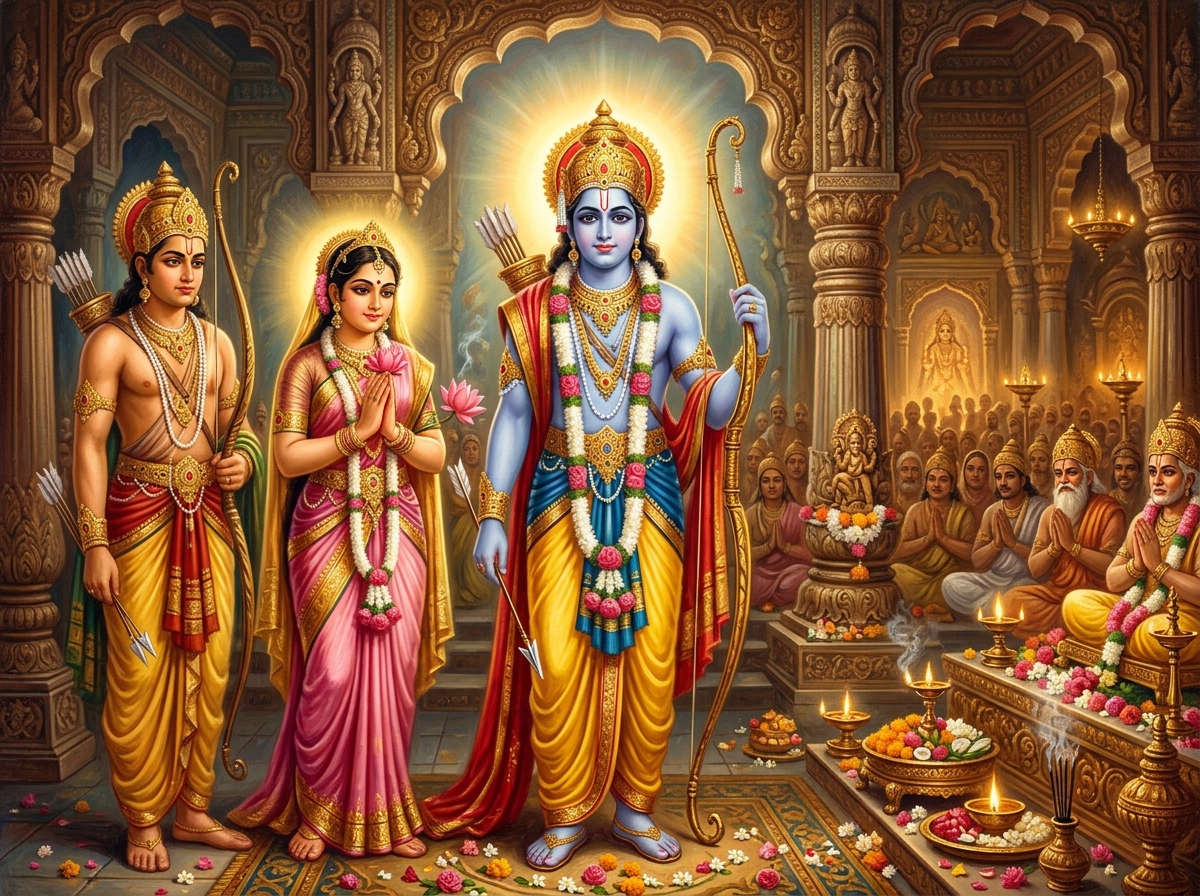
Jaya Śrī Rāma, jaya Śrī Rāma
Sītā sahita jaya Śrī Rāma
Meaning: Victory to Lord Shri Rama! Victory to Shri Rama together with Sita!
Verse 1
Raghu kula śiromaṇi Rāma raghurāī
Kośala deśa ke rājakumāra Rāma Daśaratha ke lāla ho
Meaning: O Rama, crown jewel of the Raghu dynasty, king of Raghus! O prince of the kingdom of Kosala, beloved son of King Dasharatha!
Refrain
Jaya Śrī Rāma, jaya Śrī Rāma
Sītā Rāma, jaya Śrī Rāma
Jaya Hanumāna, jaya Śrī Rāma
Meaning: Victory to Shri Rama! Victory to the united Sita-Rama! Victory to Hanuman, glory to Shri Rama!
Verse 2
Maryādā puruṣottama Rāma
Dharma rakṣaka jagat svāmī Rāma sabake hṛdaya meṃ raho
Meaning: O Rama, the perfect human being, the embodiment of righteousness! O protector of dharma, master of the universe — dwell in the hearts of all!
Verse 3
Vanavāsī Rāma vanavāsī Rāma
Vana vana phire Jānakī saṃga Rāma līlā aparaṃpāra
Meaning: O forest-dweller Rama! Wandering forest to forest with Janaki (Sita), your divine play (leela) is boundless and beyond all understanding.
Verse 4
Ayodhyā ke rāvaṇa ko vaśa meṃ karake
Rāma āe Ayodhyā meṃ Rāma līlā aparaṃpāra
Meaning: Having brought Ravana (the inner demon) under control, Rama returns to Ayodhya — his divine play is truly boundless.
The Meaning of “Maryada Purushottam”
Lord Rama is called Maryada Purushottam — the Supreme Being who upholds all boundaries and codes of righteousness. This title reveals his unique significance: he is not worshipped primarily as a miracle-worker or cosmic power, but as the ideal human being.
He demonstrates through his own life:
- Ideal son — honouring his father’s word above his own happiness
- Ideal brother — Lakshmana’s selfless service; Bharata’s renunciation
- Ideal husband — his devotion to Sita even through the most difficult circumstances
- Ideal king — Rama Rajya as the model of just, compassionate governance
- Ideal enemy — he respected even Ravana for his great learning
When to Sing
- Ram Navami — Lord Rama’s birthday (Chaitra Shukla Navami)
- During Ramayana recitation — in the evening Katha gatherings
- Morning kirtan — as part of daily bhajan practice
- Hanuman Jayanti — since Hanuman and Rama are inseparable
- Any gathering of devotees — Satsang (community of truth-seekers)
The Power of “Jai Shri Ram”
In contemporary India, Jai Shri Ram has become one of the most commonly heard devotional exclamations. But its roots go deeper than cultural identity: it is an affirmation of the victory of righteousness (dharma) over everything that opposes it.
When a Hindu says Jai Shri Ram, they are not merely naming a deity — they are affirming the victory of:
- Truth over falsehood
- Justice over injustice
- Love over hatred
- The eternal (Rama = the soul) over the temporary
Phala Shruti
Rāma nāma sadā cintan, sarva pāpa pranāśanam
Rāma nāma japed yo vai, tarati samsāra sāgaram
“One who constantly meditates on the name of Rama destroys all sins. One who chants Rama’s name crosses the ocean of worldly existence.”