॥ Raghupati Raghava Raja Ram ॥
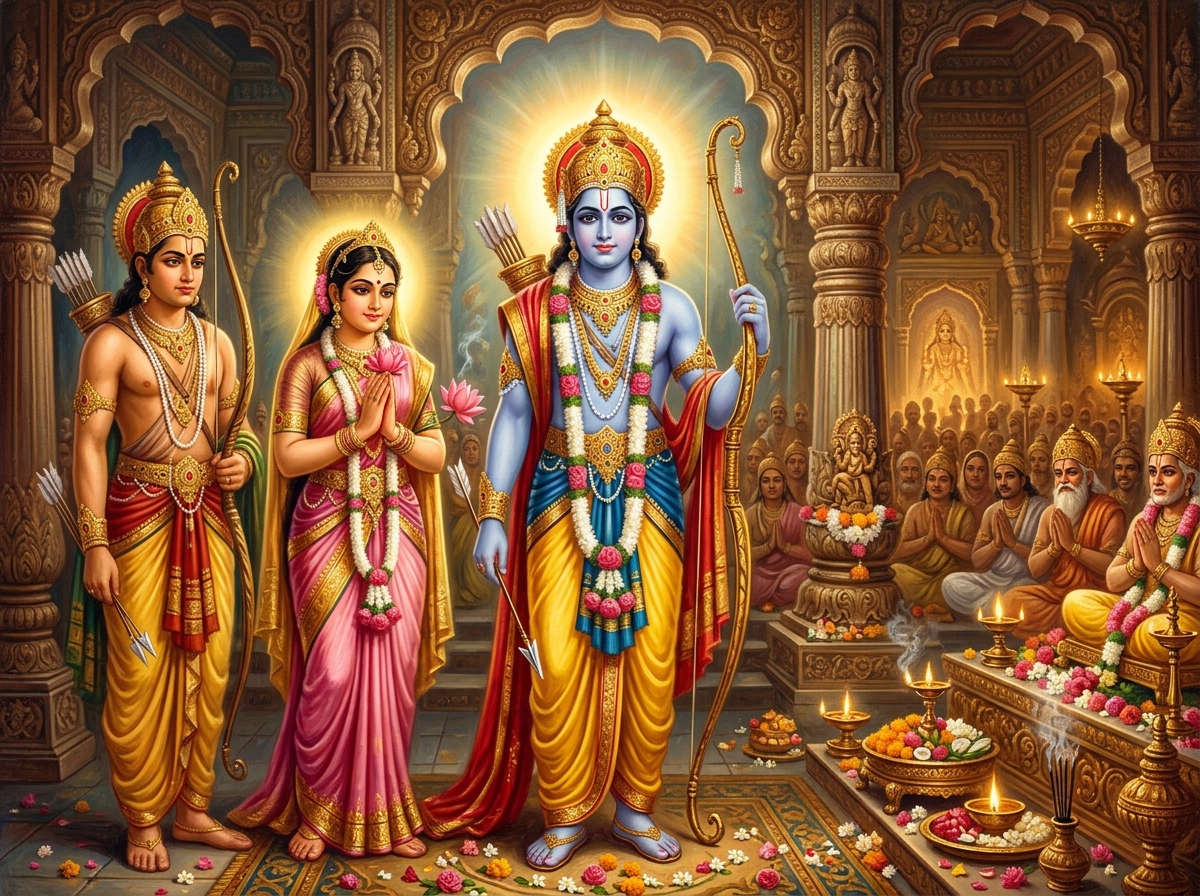
Raghupati rāghava rājārāma
Patita pāvana sītārāma
Meaning: O King Rama, scion of the Raghu dynasty! O Sita-Rama who purifies the fallen!
Verse 1
Sundara vigrah meghaśyāma
Gaṃgā tulasī śālagrāma
Meaning: O Lord with a beautiful form, dark as a rain-filled cloud! Sacred as the Ganga, the tulsi plant, and the Shaligrama stone.
The Universal Verse (Gandhi’s Addition)
Īśvara allāha tero nāma
Saba ko sanmati de Bhagavāna
Meaning: Ishvara (the Hindu name for God) and Allah (the Islamic name for God) — both are your names. O Lord, give right understanding and wisdom to all.
Refrain
Raghupati rāghava rājārāma
Patita pāvana sītārāma
Jānakī ramaṇa jaya Śrī Rāma
Meaning: O Rama who delights Janaki (Sita)! Victory to Lord Shri Rama!
Verse 2
Bhaja pyāre mana sītārāma
Saba jaga jīvana Rāma re Rāma
Meaning: O beloved mind, worship Sita-Rama! Rama is the life of the entire universe.
Verse 3
Rāma Rāma japo mana mere
Dukha sukha mana me Rāma hī base
Meaning: O my mind, chant Ram Ram! In both sorrow and joy, let only Rama dwell in the mind.
Historical Significance: Mahatma Gandhi
The Raghupati Raghava Raja Ram is inseparably connected with Mahatma Gandhi and India’s independence movement. It was Gandhi’s favourite prarthana (prayer) — sung every morning and evening at his ashram, at political meetings, and during the salt march.
Gandhi’s contribution was profound: he added the verse “Ishvar Allah tero naam” — affirming that the divine addressed by Hindus as Ishvara and by Muslims as Allah is ultimately the same reality. This was not a theological compromise but a radical spiritual vision of unity.
For Gandhi, Raghupati Raghava was not merely a devotional song — it was a political and spiritual manifesto: all of humanity bowing before the same sacred reality, transcending all divisions of religion, caste, and nation.
Origin
The original song is a kirtan composed in praise of Lord Rama from the Tamil Vaishnava tradition, later popularized in Hindi. The specific version associated with Gandhi was sung by his associate Narayan Moreshwar Khare (Kaka Saheb Kalelkar) and became the unofficial anthem of the Indian independence movement.
The Meaning of “Patita Pavana”
Patita Pavana — purifier of the fallen — is one of the most beloved epithets of Lord Rama. It tells us that Rama’s grace is not reserved for the righteous and virtuous. He is especially the refuge of those who have fallen — who have made mistakes, who carry shame, who feel unworthy.
This is why the bhajan begins with this name: whoever sings it — regardless of their personal history — is addressing the Lord who accepts all who turn toward him with sincere hearts.
When to Sing
- Morning and evening prayers — this bhajan is perfect for group singing (Satsang)
- Independence Day (August 15) — honouring its connection to the freedom movement
- Interfaith gatherings — its message of universal divine unity
- Ram Navami — the birthday of Lord Rama
- Times of conflict or division — when its message of unity is most needed
Phala Shruti
Jaya Rāma Rāma Rāma — jaya Rāma Rāma Rāma
Whoever sings this bhajan with a united heart — Hindu and Muslim, high and low, ancient and young — they experience the truth that Gandhi sought: beneath all division, there is one Presence, one Source, one Love.