॥ Diwali — Deepavali ॥
The Festival of Lights — Kartika Amavasya (New Moon Night of October-November)
What is Diwali?
Diwali (also called Deepavali — Deepa = lamp, Avali = row) is the most celebrated festival in the Hindu calendar. It falls on the new moon night of the month of Kartika — the darkest night of the autumn lunar cycle — when rows of oil lamps (deepas) transform the darkness into brilliant light.
At its deepest level, Diwali celebrates the victory of:
- Light over darkness
- Knowledge over ignorance
- Truth over falsehood
- Good over evil
- Life over death
The Five Days of Diwali
Day 1: Dhanteras (Dhan Trayodashi)
The Thirteenth Lunar Day of Kartika Krishna Paksha
Dhanteras is dedicated to Lord Dhanvantari — the divine physician who emerged from the ocean of milk carrying the pot of immortal nectar (amrita). On this day:
- Purchase gold, silver, or metal items (particularly utensils)
- Light the first lamp of Diwali outside your home
- Worship Yama Deepa — a lamp facing south, to ward off untimely death
Day 2: Naraka Chaturdashi (Chhoti Diwali)
The Fourteenth Lunar Day
This day commemorates the slaying of the demon Narakasura by Lord Krishna (with help from his wife Satyabhama). The demon had imprisoned 16,000 women and spread terror. When Krishna slew him, the imprisoned souls were freed and returned to their families, celebrated with lamps and joy.
- Wake before sunrise and apply sesame oil before bathing
- Light lamps
Day 3: Diwali (Lakshmi Puja Night)
The New Moon Night — Amavasya
This is the main night of Diwali. Goddess Lakshmi is said to visit homes on this night, bringing prosperity. The ritual:
- Clean the entire home thoroughly
- Draw rangoli (colorful patterns) at the entrance
- Light rows of lamps throughout the home and outside
- Perform Lakshmi Puja in the evening
- Burst firecrackers (symbolic of driving away evil)
Day 4: Govardhan Puja (Annakoot)
The First Day of Kartika Shukla Paksha
This celebrates Lord Krishna lifting Mount Govardhan on his little finger to protect the people of Vrindavan from Indra’s torrential rains. A mountain of food (annakoot = mountain of food) is prepared and offered to Lord Krishna.
Day 5: Bhai Dooj (Bhai Phota)
The Second Day of Kartika Shukla Paksha
Bhai Dooj celebrates the bond between brothers and sisters. Sisters apply a tilak on their brothers’ foreheads and pray for their longevity. Brothers give gifts. This parallels Raksha Bandhan in the sister-brother tradition.
The Spiritual Stories
Story 1: Lord Rama’s Return to Ayodhya
When Lord Rama returned to Ayodhya after 14 years of exile — having slain the demon Ravana and rescued Sita — the people of Ayodhya celebrated his homecoming by lighting rows of lamps (deepas) throughout the city. This is the origin of Diwali in the Vaishnava tradition.
The spiritual message: when truth (Rama) returns after its long journey through darkness and difficulty, even the ordinary becomes extraordinary, even the darkest night becomes radiant with joy.
Story 2: The Churning of the Ocean (Samudra Manthan)
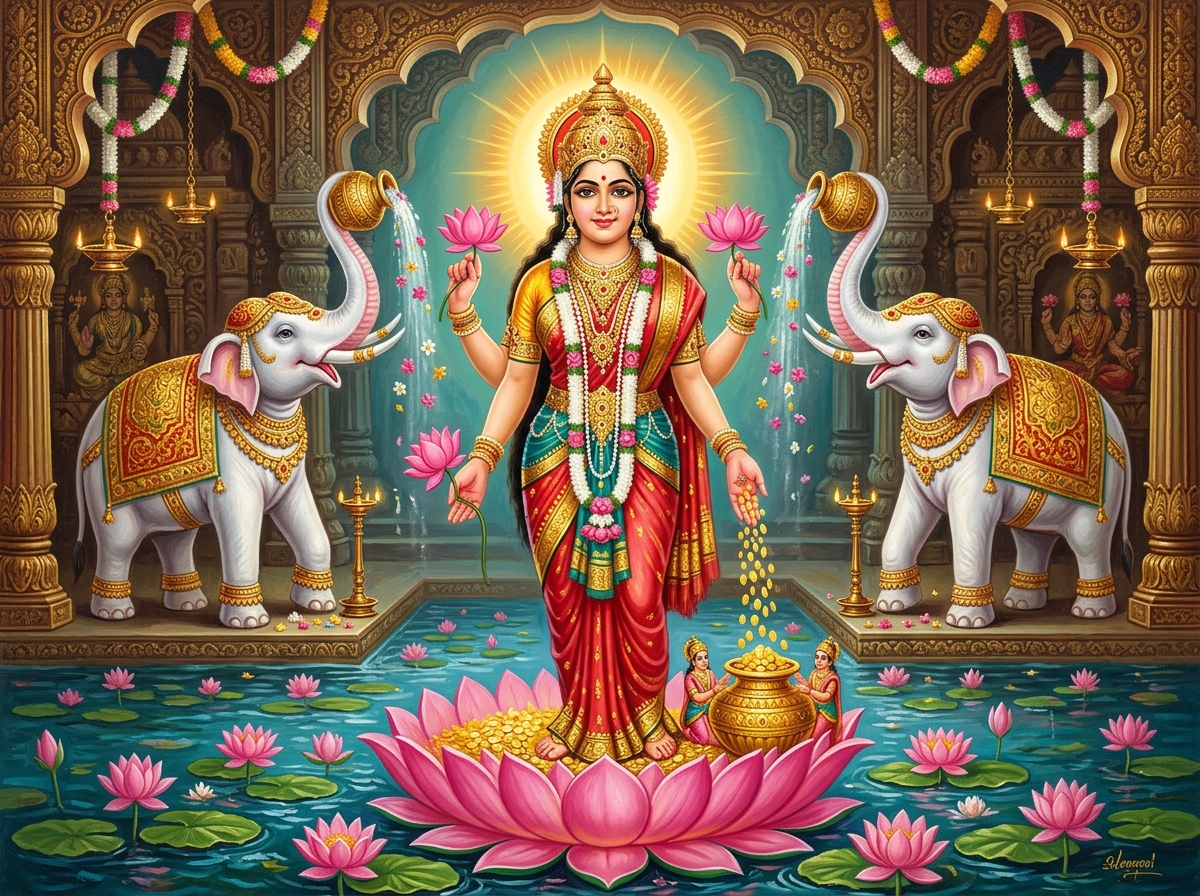
One tradition holds that Goddess Lakshmi emerged from the cosmic ocean on this day — rising from the primordial waters, seated on a lotus, welcomed by all the gods. Diwali then celebrates her appearance and her annual visit to bless human homes.
Story 3: Narakasura’s Defeat
In the Krishna tradition, Diwali commemorates the defeat of the demon Narakasura — representing the defeat of all internal demons: pride, greed, lust, anger, and delusion.
The Lakshmi Puja on Diwali Night
Preparation:
- Clean the entire house (Lakshmi does not enter dirty homes)
- Draw rangoli at the entrance with white chalk or rice flour
- Place lotus flowers, marigolds, and white jasmine in the puja area
- Set up the Lakshmi and Ganesha images on a red cloth
The Puja:
- Sankalpa — state your intention
- Invocation — invite Lakshmi with the Shri Sukta
- Panchamrit Abhishekam — bathing with five nectars
- Vastra samarpana — offer garments
- Pushpa samarpana — offer lotus flowers
- Naivedya — offer kheer, fruits, and sweets
- Aarti — Om Jai Jagdish Hare or Lakshmi Aarti
- Pradakshina — circumambulate the puja area
- Mantra recitation — Shri Suktam, Om Shreem Mahalakshmiyei Namaha
After Puja:
- Light lamps in every room of the house
- Place a lamp at the entrance facing outward (to welcome Lakshmi)
- Distribute prasad
The Meaning of the Lamps
Why lamps, specifically? In Vedic philosophy, fire (Agni) is the divine witness — the intermediary between the human and the divine. When we light a lamp, we are not merely illuminating a room; we are:
- Acknowledging the inner light — the divine consciousness (Chit) that illuminates our minds
- Inviting the divine — Agni carries our prayers upward
- Driving away darkness — both literal darkness and the inner darkness of ignorance and negativity
The clay lamp (diyas) used at Diwali is particularly significant: made of earth (Prithvi), filled with oil or ghee (the essence of all creation), with a cotton wick (the subtle body) — it represents the human being. When lit, it burns to give light. This is the purpose of human life: to burn with the fire of devotion, knowledge, and service, giving light to all around.
Traditional Diwali Recipes
- Kheer — rice pudding with saffron, offered to Lakshmi
- Mathri — savory fried crackers
- Gulab jamun — milk-solid sweets in rose syrup
- Barfi — condensed milk squares with nuts
- Chakli — spiral savory snacks
Phala Shruti
Deepavali karte jo nar, Lakshmi prasanna hoti
Ghar mein sukh sampatti bhare, jahan deepmalika joti
“In the home where lamps are lit for Diwali and Lakshmi is worshipped with devotion — there the Goddess is pleased, and the home is filled with happiness, health, and prosperity.”