॥ Maha Shivratri ॥
The Great Night of Lord Shiva — The Most Sacred Night in the Shaiva Calendar
What is Maha Shivratri?
Maha Shivratri (Maha = great; Shiva = the auspicious one; Ratri = night) falls on the 14th day of the dark fortnight of the month of Phalguna (February-March). It is the greatest festival of the Shaiva tradition — a night when devotees keep a vigil through the entire dark night, worshipping Lord Shiva in his four-hour (prahar) cycles.
There is a Shivratri every month (the 14th lunar night), but Maha Shivratri — the Great Shiva Night — is the most powerful of all.
Why is Shivratri on a Dark Moon Night?
In Hindu cosmology, the dark moon night (Krishna Chaturdashi) represents the moment when all light is withdrawn — the darkness before new light. Lord Shiva is called the lord of this threshold between existence and non-existence, between creation and dissolution.
Shivratri is the most powerful night for spiritual practice precisely because the darkness represents the removal of all outer distraction. When the lights of the outer world go out, the inner light of Shiva’s consciousness can shine most brightly.
The Legends of Maha Shivratri
Legend 1: The Cosmic Dance of Shiva
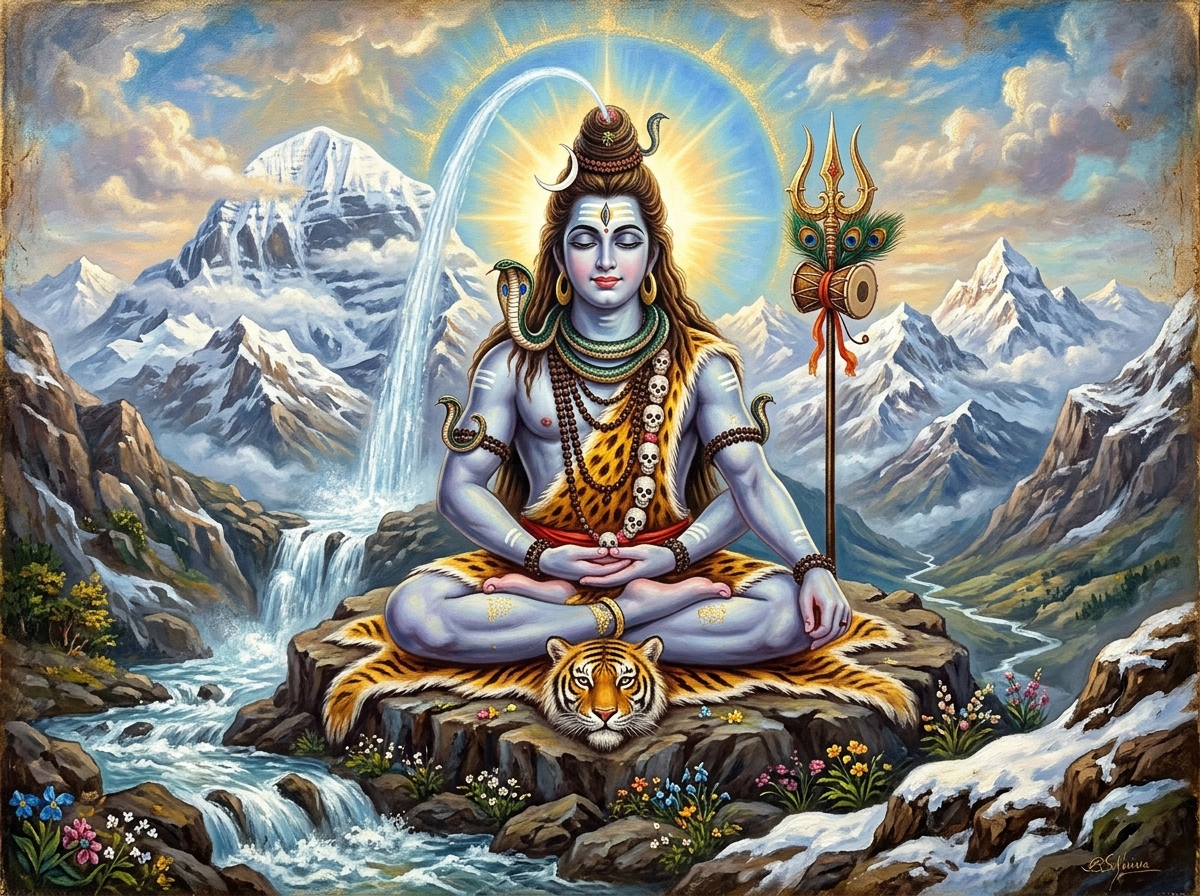
On this night, Lord Shiva performed his cosmic Tandava dance — the dance of creation, preservation, and destruction that sustains the universe. The entire cosmos trembles with the rhythm of this dance. Devotees who worship on this night align themselves with the cosmic rhythm and receive the energy of Shiva’s divine dance.
Legend 2: The Marriage of Shiva and Parvati
Another tradition holds that on this night, Lord Shiva and Goddess Parvati were united in cosmic marriage (Kalyana). Their union — the coming together of pure consciousness (Shiva) and divine energy (Shakti/Parvati) — represents the primordial wholeness before creation and the highest state of spiritual realization.
Legend 3: The Hunter’s Accidental Worship
A hunter named Gurudruha spent the night in a forest, unable to sleep, keeping watch for animals from a bilva tree. Through the night, bilva leaves fell accidentally onto a Shivalinga beneath the tree (which he hadn’t noticed). His accidental, sleep-deprived vigil — spending the night awake near a Shiva linga with bilva leaves falling — was enough to receive Lord Shiva’s grace. He attained liberation at the end of his life.
The lesson: Even an accidental, unconscious approach to Shiva’s grace has its effect. How much more powerful, then, is a conscious, devoted all-night vigil!
The Four Prahars of Worship
The night is divided into four equal parts (prahars), each about three hours long. Devoted Shaivas perform a separate Abhishekam (ritual bathing of the Shivalinga) in each prahar:
First Prahar (Evening — around 6-9 PM)
Abhishekam with Milk (Ksheera)
Mantra: Om Namah Shivaya — ksheera abhishekam samarpayami
Offering: White flowers, white bel leaves, white sandalwood paste
Significance: Invokes Shiva’s blessings for dharma (righteousness) in the life of the devotee
Second Prahar (First half of night — around 9 PM - 12 AM)
Abhishekam with Curd (Dadhi)
Mantra: Om Namah Shivaya — dadhi abhishekam samarpayami
Offering: Honey, sugar cane juice
Significance: Invokes Shiva’s blessings for artha (prosperity, material well-being)
Third Prahar (Second half of night — around 12 - 3 AM)
Abhishekam with Ghee (Ghrita)
Mantra: Om Namah Shivaya — ghrita abhishekam samarpayami
Offering: Panchamrit, fragrant flowers
Significance: Invokes Shiva’s blessings for kama (love, fulfillment of righteous desires)
Fourth Prahar (Pre-dawn — around 3-6 AM)
Abhishekam with Honey (Madhu)
Mantra: Om Namah Shivaya — madhu abhishekam samarpayami
Offering: Coconut water, sesame seeds
Significance: Invokes Shiva’s blessings for moksha (liberation)
The Shivalinga Abhishekam
The Shivalinga is the central sacred form for Shiva worship. The word Linga literally means symbol or mark — it is the abstract, universal symbol of the infinite consciousness of Lord Shiva.
Sacred items for Abhishekam:
| Item | Significance |
|---|---|
| Milk | Purity, nourishment |
| Curd | Prosperity, coolness |
| Honey | Sweetness of devotion |
| Ghee | Purity, sacrifice |
| Sugar water | Divine sweetness |
| Coconut water | Purity, refreshment |
| Water (especially Gangajal) | Universal purifier |
| Bel/Bilva leaves | Shiva’s most beloved offering — three leaves represent the three eyes of Shiva, or the Trimurti |
| Dhatura flowers | Sacred to Shiva (though not used by all) |
| Blue/white flowers | Shiva’s preferred colors |
The Fasting Practice
Full fast: Many devotees maintain a complete fast from the previous evening through the entire Shivratri night, breaking only on the next morning after bathing and puja.
What to avoid: All grains, regular salt, meat, alcohol
What is permitted: Fruits, milk, curd, nuts, sabudana, sweet potatoes, rock salt
The deeper meaning of fasting: The fast is not primarily about physical discipline. It is about creating space within — reducing the burden of digestion so that the mind becomes light, alert, and available for meditation and prayer through the night.
The Night Vigil (Jagran)
Staying awake through the entire night of Maha Shivratri is considered extremely auspicious. Activities during the vigil:
- Recite Mahamrityunjaya Mantra — 108 times in each prahar
- Recite Om Namah Shivaya — continuously
- Recite Shiva Tandava Stotram
- Sing Shiva bhajans with other devotees
- Read Shiva Purana or listen to discourses
- Meditate — facing north, spine erect, eyes gently closed
Phala Shruti
The Shiva Purana states:
Mahāśivarātrau yo jāgarti naktaṃ śivaparo naraḥ
Sa sarva pāpa nirmukto yāti śivalokam uttamam
“The person who is devoted to Shiva and keeps vigil throughout the night of Maha Shivratri is freed from all sins and reaches the highest realm of Lord Shiva.”
Even Lord Brahma confirmed to the assembled sages: “On no other night of the year does sincere worship of Lord Shiva produce more powerful results than on this great night. Even a single bel leaf offered with love on this night is worth ten thousand elaborate rituals on ordinary days.”