॥ Mata Ki Jai ॥
A joyful devotional song celebrating the Goddess — sung during Navratri, Jagran nights, and Durga Puja
Opening Refrain
Mātā kī jaya, mātā kī jaya
Durgā mātā kī jaya
Meaning: Victory to the Mother! Victory to the Mother! Victory to Mother Durga!
Verse 1
Tū hī jagata kī māṃ hai ambe
Tū hī karatī sabakā kāma
Mātā rānī terā darbāra
Tujhako śata-śata praṇāma
Meaning: You alone are the mother of the entire world, O Amba! You alone accomplish everything for everyone. O Mother Queen, your divine court — I bow to you a hundred times, a hundred times!
Verse 2
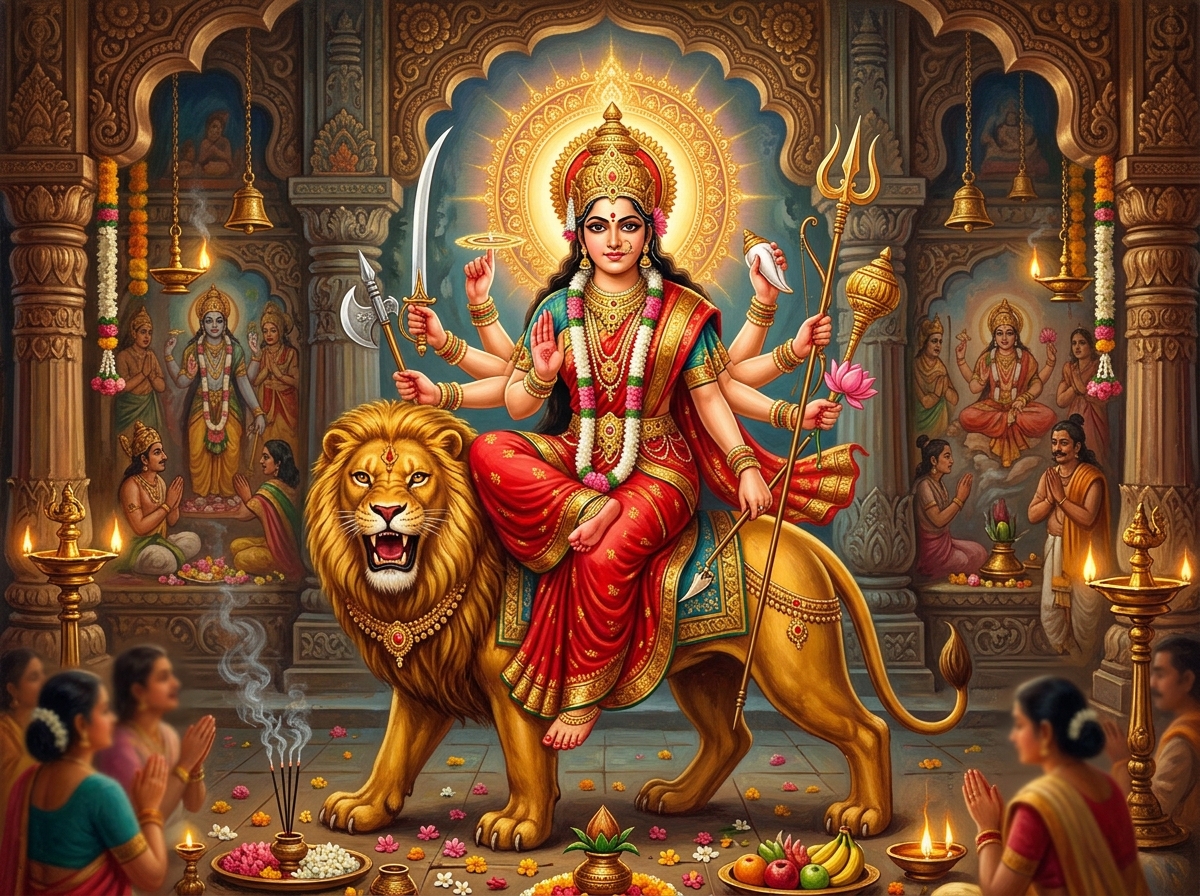
Nau rūpoṃ meṃ tū hai mātā
Śera para baiṭhī hai mahārāja
Lāla cunarī, lāla cūṛī
Lāla raṃga meṃ dekho āja
Meaning: You are the Mother in nine forms. You are seated on the lion, O Great Queen! Red dupatta, red bangles — today behold her in red!
Verse 3
Dukhiyoṃ kā dukha haratī mātā
Bhaktoṃ ko detī varadāna
Jo bhī āyā darbāra meṃ tere
Usake huā kalyāṇa
Meaning: The Mother removes the suffering of the suffering ones. She grants boons to her devotees. Whoever has come to your divine court — their welfare has been accomplished!
Verse 4
Terā jayakārā gūṃje mandira meṃ
Jaya Mātā Dī kī āvāza
Lākhoṃ dīpaka jalate tere
Āja kā hai yaha khāsa āvāza
Meaning: Your victory cry resounds in the temple — “Jai Mata Di!” is the voice! Hundreds of thousands of lamps are lit for you. Today is a very special voice — a special day!
Verse 5 (Concluding)
Tere caraṇoṃ meṃ sira jhukāte
Māṃ terī karate ārādhanā
Jaya Mātā Dī, jaya Mātā Dī
Yahī hamārī kāmanā
Meaning: We bow our heads at your feet — we worship you, O Mother! Jai Mata Di, Jai Mata Di — this alone is our prayer and wish!
“Jai Mata Di!” — The Universal Cry
“Jai Mata Di!” (Victory to the Mother Goddess!) is one of the most powerful and universally recognized devotional exclamations in the Hindu tradition. It is heard:
- In Vaishno Devi temple at all hours
- On the road during Navratri processions
- At Durga Puja pandals across India
- At the beginning of any difficult work
It is not merely a religious slogan — it is an acknowledgment of something profound: there is a force in the universe that protects, nourishes, and ultimately liberates all beings. That force is the Mother. Saying “Jai Mata Di” is a daily renewal of trust in that maternal, protective cosmic energy.
The Jagran: All-Night Vigil for the Goddess
The Mata Ki Jai bhajan is especially associated with Jagran — the all-night devotional vigil for the Goddess, typically held during Navratri. A Jagran (from “jagana” — to be awake) is a community gathering where:
- Bhajans and kirtans to the Goddess are sung all night
- Mata Ki Jai is sung repeatedly with great enthusiasm
- Devotees take turns singing
- A flame burns continuously at the center
- The Goddess’s story (katha) is recited
Staying awake all night in devotion creates a profound alteration of consciousness — the ordinary ego-driven mind exhausts itself and, in that exhaustion, something deeper becomes available.
The Red Color of the Goddess
The verse mentions red (lāl) repeatedly — red dupatta, red bangles, red color. Red is the primary color of the Goddess throughout the Hindu tradition:
- Red represents both the fire of creation and the blood of life
- It is the color of Shakti — raw, primal creative power
- Red flowers (hibiscus, roses) are her preferred offering
- Kumkum (vermilion) is the central mark of feminine sacred energy
- Married women wear red to invoke Lakshmi’s blessing
When to Sing
- All nine nights of Navratri — especially the Jagran nights
- Ashtami and Navami — the most powerful nights
- Durga Puja (Saptami, Ashtami, Navami) — in Bengali tradition
- Vaishno Devi pilgrimage — this bhajan is sung the entire route
- Any Tuesday or Friday — Devi’s auspicious days
Phala Shruti
Mātā kī jaya, durgā mātā kī jaya — yo gāyati bhakti bhāve
Tasya sarvāṇi kāryāṇi, mātā kṛpā pūrṇa bhāve
“Whoever sings ‘Victory to the Mother, victory to Mother Durga’ with sincere devotion — the Mother fulfills all their work with her abundant grace.”