
॥ Ganesh Mantra ॥
The Ganesh Beeja Mantra (Seed Mantra)
Om Gaṃ Gaṇapataye Namaḥ
Meaning: Om — I bow to Lord Ganesha, the Lord of all ganas (divine attendants), whose seed syllable is Gam.
The Vakratunda Mantra
Vakratuṇḍa mahākāya sūryakoṭi samaprabha
Nirvighnaṃ kuru me deva sarvakāryeṣu sarvadā
Meaning: O Lord with the curved trunk and colossal body, whose radiance equals that of a million suns! O divine Lord — always remove all obstacles from all my endeavours.
The Siddhi Vinayaka Mantra
Om Shrīṃ Hrīṃ Klīṃ Glauṃ Gaṃ Gaṇapataye Vara Varada Sarvajanaṃ me vaśamānaya Svāhā
Meaning: O Ganesha, who bestows all blessings and the greatest boons — bring all people in alignment with my righteous purpose. Svaha (so be it)!
The Meaning of “Ganesha”
| Name | Meaning |
|---|---|
| Ganesha | Lord (Isha) of the ganas (divine beings) |
| Ganapati | Master (Pati) of the cosmic groups (gana) |
| Vighneshvara | Lord who removes obstacles (vighna) |
| Siddhivinayaka | He who bestows accomplishment (siddhi) |
| Lambodara | The large-bellied one (contains the cosmos) |
| Ekadanta | The single-tusked one |
Origin & Significance
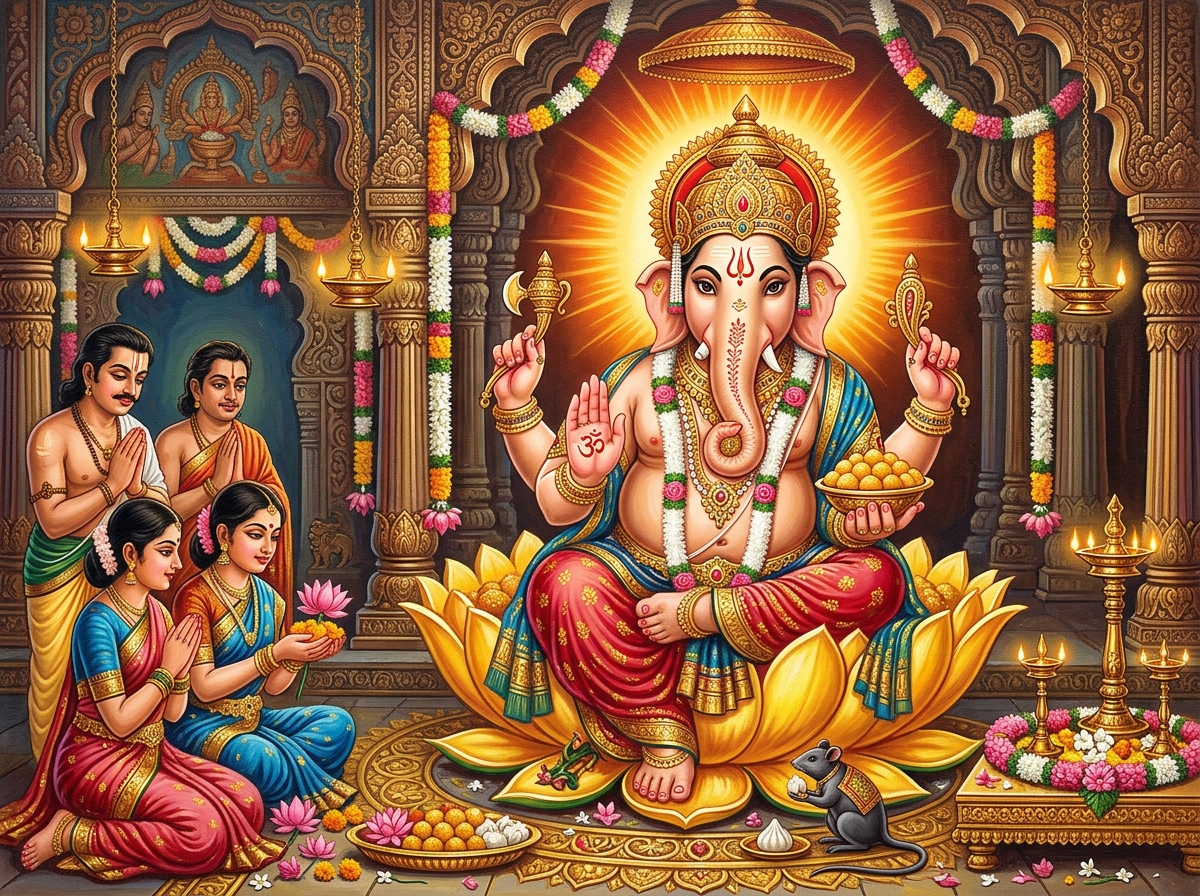
Lord Ganesha is the first-born son of Lord Shiva and Goddess Parvati. He is invoked at the beginning of every prayer, every ceremony, every journey, and every new enterprise — because he is the master of beginnings and the lord who clears the way.
The sacred text Ganesha Purana and the Mudgala Purana are entirely devoted to his glory. In the Atharva Veda, Ganesha is identified with the cosmic principle of Brahmanaspati — the lord of sacred knowledge.
His famous elephant head is explained by different legends, but its spiritual significance is clear: the elephant is the animal of great memory, wisdom, and power — Ganesha embodies the supreme intellect (buddhi) that can navigate the most complex terrain.
Benefits of Chanting
- Removal of obstacles — Ganesha is Vighnaharta — the one who removes all blockages
- Success in new beginnings — job interviews, business launches, examinations, marriages
- Intelligence and learning — he is the patron of students and scholars
- Spiritual progress — removes the internal obstacles of ego, attachment, and ignorance
- Auspiciousness — his very presence brings good fortune to the household
Method of Chanting
Best time: Wednesday (Ganesha’s day) is most auspicious; also before beginning any important task
Mala: Red coral or rudraksha mala
Repetitions: 108 times; for special purposes, 1008 times on a Wednesday
Offerings: Modak (sweet dumplings), durva grass (triple-bladed grass), red hibiscus flowers, coconut
Best position: Facing east
Before any puja: Always begin with the Ganesh mantra — it ensures the puja will proceed without obstacles and that the deity invoked will receive the offerings.
The Story of the Curved Tusk
When the sage Parashuram came to visit Lord Shiva while he was resting, Ganesha blocked his path to protect his sleeping father. An argument ensued and Parashuram hurled his divine axe — which Ganesha recognized as a gift from Shiva. Out of respect for his father’s gift, Ganesha allowed the axe to strike his tusk rather than deflecting it.
This act revealed Ganesha’s nature: he who governs obstacles is himself free from the obstacles of ego and pride. The broken tusk became his quill — for Ganesha used his own tusk to write down the entire Mahabharata as dictated by sage Vyasa.
Phala Shruti
From the Ganesha Purana:
Ekadantam mahakayam taptakanchanasannibham
Lambodaram vishalamaksham Ganesha pranamamyaham
“I bow to the single-tusked Ganesha — of great body, shining like molten gold, with a large belly and wide eyes.”
“Whoever worships Ganesha before beginning any work, that work shall be completed without impediment, with all success and joy.”