
॥ Gayatri Mantra ॥
Om Bhur Bhuvaḥ Svaḥ
Tat Savitur Vareṇyaṃ
Bhargo Devasya Dhīmahi
Dhiyo Yo Naḥ Prachodayāt॥
Word-by-Word Meaning
| Sanskrit Word | Meaning |
|---|---|
| Om | The primordial sound, the sacred syllable representing the Supreme |
| Bhur | The physical realm; the earth; the vital breath (Prana) |
| Bhuvaḥ | The astral realm; the sky; the mental realm |
| Svaḥ | The celestial realm; the heavens; the causal realm |
| Tat | That; referring to the Supreme Brahman |
| Savitur | Of Savitri — the divine solar deity who illuminates all |
| Vareṇyaṃ | Most worthy of being chosen and adored |
| Bhargo | The radiant, purifying spiritual light |
| Devasya | Of the divine, of God |
| Dhīmahi | We meditate upon; we contemplate |
| Dhiyo | The intellect; the faculty of understanding |
| Yo | Who |
| Naḥ | Our |
| Prachodayāt | May inspire, illuminate, and guide |
Complete Meaning
We meditate upon the supreme spiritual effulgence of that adorable Divine Reality — the source of all creation, who illuminates the three realms of existence. May that transcendent light inspire, purify, and direct our intellect toward the highest truth.
Origin & Significance
The Gayatri Mantra is found in the Rigveda (Mandala 3, Hymn 62, Verse 10), composed by the great sage Vishwamitra. It is addressed to Savitri — the solar deity who represents the light of divine consciousness. Among all Vedic mantras, the Gayatri holds the highest position, often called the mother of all mantras (Vedamata).
In Hindu tradition, this mantra is recited during Sandhyavandanam — the three daily prayer rituals at dawn, noon, and dusk — as an act of surrender to the divine light that sustains all life.
Benefits of Chanting
- Intellectual clarity: Sharpens the faculty of discernment and understanding
- Spiritual protection: Surrounds the practitioner with divine light
- Inner purification: Cleanses the mind of negative impressions
- Liberation from ignorance: Dispels the darkness of spiritual blindness
- All-round well-being: Promotes physical, mental, and spiritual health
Method of Chanting
Best time: At dawn (Brahma Muhurta — before sunrise), at noon, and at sunset
Posture: Sit facing east in the morning, north at noon, and west at evening
Repetitions: 108 times using a rosary (mala), or multiples of 10
Prerequisites: Bathe before chanting, wear clean clothes, sit in a clean place
Mantra Japa sequence:
- Begin with Om — a moment of silence
- Chant Bhur Bhuvaḥ Svaḥ — invoking the three realms
- Complete the full mantra with deep concentration
- Offer the merit to all living beings at the end
Gayatri Mantra in Daily Life
The ancient teachers taught that chanting the Gayatri Mantra 108 times daily for 40 consecutive days (a mandala) brings about a profound transformation in the practitioner’s consciousness. Even a single sincere recitation with understanding and devotion is said to purify the mind for the equivalent of 100 years of spiritual practice.
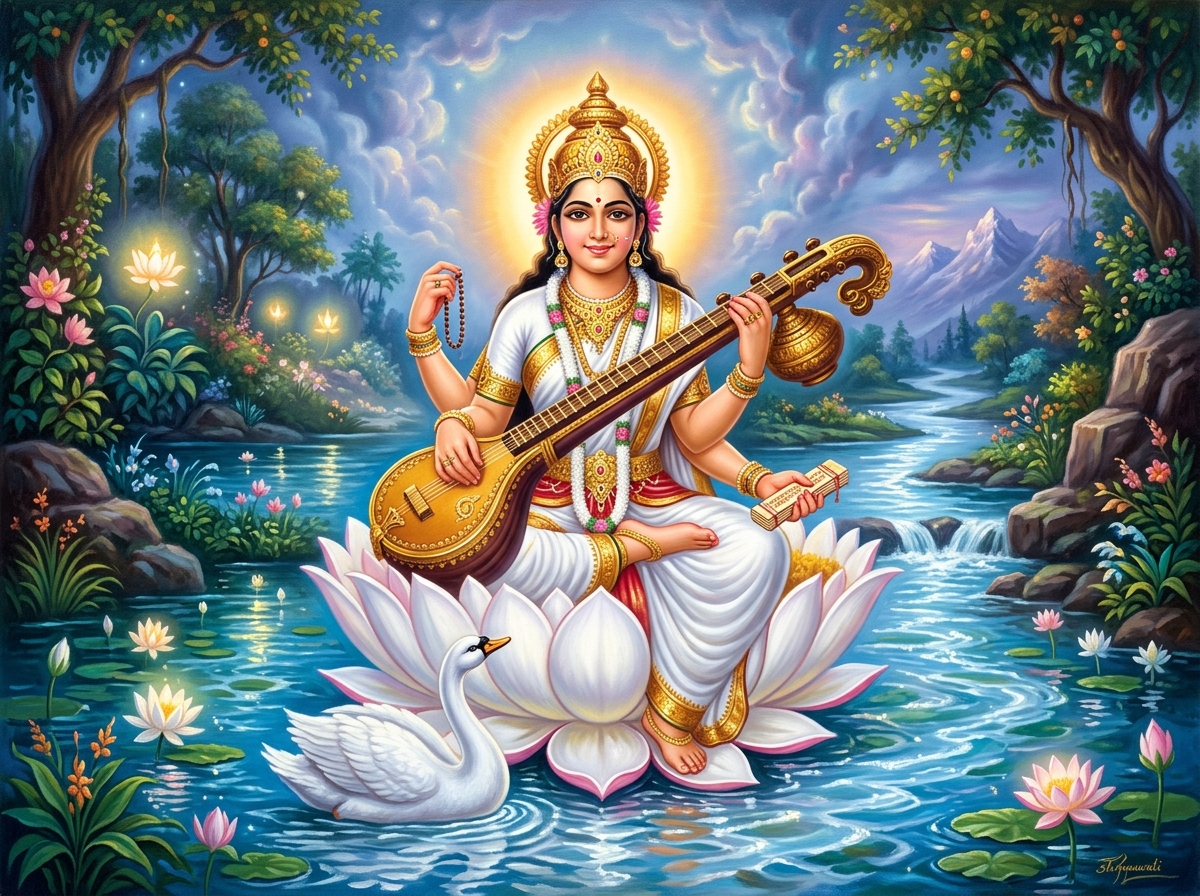
The goddess Gayatri Devi is depicted with five heads representing the five vital breaths (pancha prana) and ten arms holding various divine instruments. She rides a swan and is venerated as the embodiment of the Vedas themselves.
Phala Shruti (Fruit of Recitation)
Ya imam nityam japeyat sahasrakritvo manuḥ
Sa pumsan asuran hanyad yadyapi syad baladhikaḥ
“Whoever recites this mantra daily, even the most powerful forces of darkness cannot harm them.”
— Atharva Veda