
॥ Lakshmi Mantra ॥
The Lakshmi Beeja Mantra (Seed Mantra)
Om Śrīṃ Mahālakṣmyai Namaḥ
Meaning: Om — salutations to the great Goddess Lakshmi, whose seed syllable of divine grace is Shreem.
The Lakshmi Ashtakam Opening Mantra
Namaste’stu mahāmāye śrīpīṭhe surapūjite
Śaṅkhacakragadāhaste mahālakṣmi namo’stute
Meaning: Salutations to the great cosmic illusion-power, the abode of divine grace, worshipped by gods! O Mahalakshmi, holding conch, discus, and mace — I bow to you!
The Shri Sukta Opening (From Rigveda)
Om Hiraṇyavarṇāṃ hariṇīṃ suvarṇarajatasrajām
Candrāṃ hiraṇmayīṃ Lakṣmīṃ jātavedo ma āvaha
Meaning: O Agni (Jataveda)! Bring to me that Goddess Lakshmi who shines with golden radiance, who is beautiful as a deer, adorned with garlands of gold and silver, who is moon-like, golden-hued — bring her to me!
The Meaning of “Lakshmi”
| Name | Meaning |
|---|---|
| Lakshmi | From lakshanā — she who is the mark of all auspiciousness; or she who marks and measures all |
| Shri | Divine grace, beauty, splendour, prosperity |
| Padma | The lotus — purity arising from the cosmic waters |
| Kamala | The lotus-born one |
| Mahalakshmi | The supreme Goddess of all abundance |
The word Shreem — her beeja syllable — encodes the qualities of the Goddess: beauty (Sha), prosperity (Ra), grace (Ee), and the aspiration for the divine (Anusvar — the nasal sound).
Origin & Significance
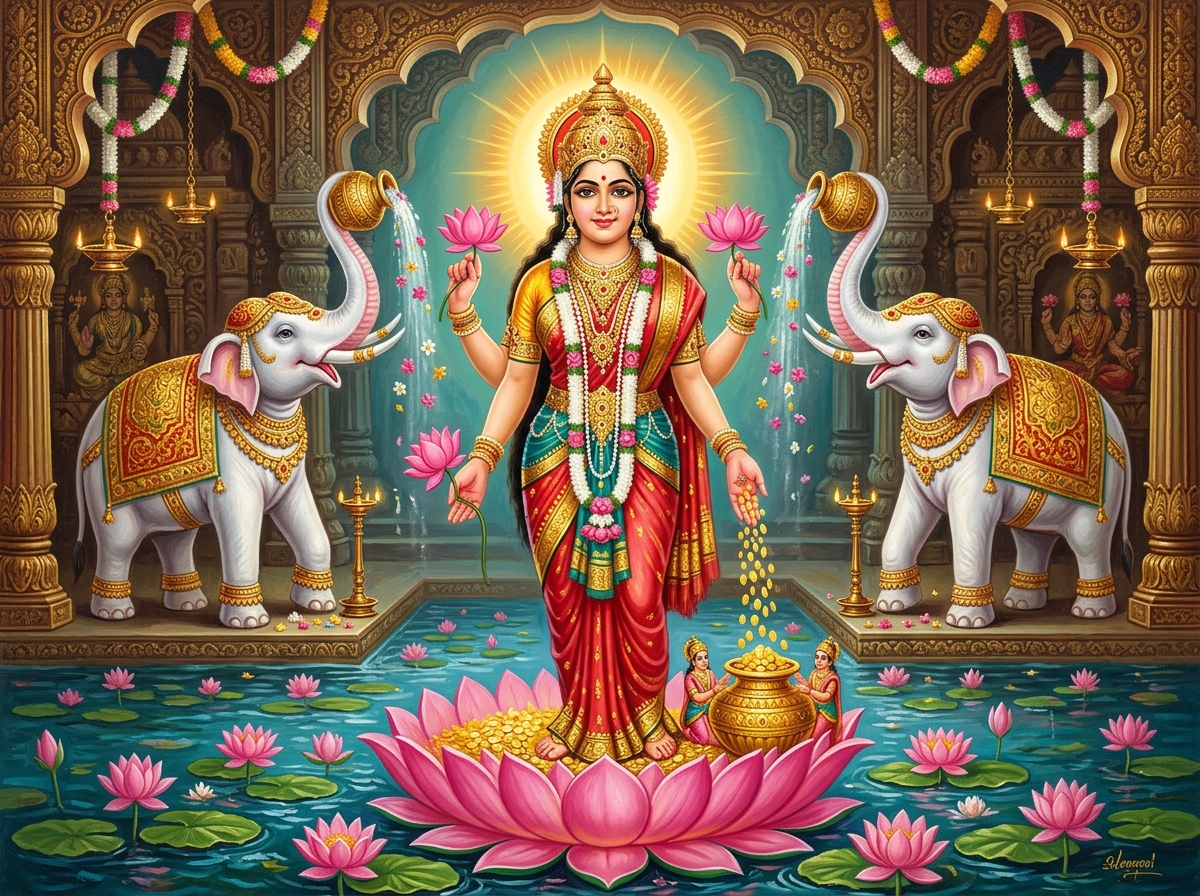
Goddess Lakshmi arose from the Churning of the Cosmic Ocean (Samudra Manthan) — emerging radiant and perfect from the primordial waters, seated on a lotus, adorned by celestial elephants showering her with sacred waters.
She is the eternal consort of Lord Vishnu and resides in his heart. She is described in the Shri Sukta of the Rigveda as the power of divine grace (anugraha) without which even the greatest wealth, power, or beauty becomes hollow and temporary.
Her four arms hold:
- Lotus — purity, detachment, and spiritual beauty
- Lotus — continuous blessing and growth
- Gold coins (Varada mudra) — the gesture of giving abundance
- Abhaya mudra — the gesture of fearlessness and protection
The Eight Forms of Lakshmi (Ashtalakshmi)
| Form | Blessing |
|---|---|
| Adi Lakshmi | Primordial divine grace |
| Dhanya Lakshmi | Abundance of food and grains |
| Dhairya Lakshmi | Courage and inner strength |
| Gaja Lakshmi | Prosperity through royal power |
| Santana Lakshmi | Blessings of children and family |
| Vijaya Lakshmi | Victory in all undertakings |
| Vidya Lakshmi | Knowledge and wisdom |
| Dhana Lakshmi | Wealth and material abundance |
Benefits of Chanting
- Material prosperity — the most direct blessing of the Lakshmi mantra
- Elimination of debt and poverty — sincere daily chanting transforms financial situations
- Beauty and attraction — the Goddess bestows the inner beauty that draws others
- Fertility and family blessings — especially beneficial for those seeking children or family harmony
- Health — Dhaanya Lakshmi blesses the household with nourishing food and health
- Spiritual elevation — true Lakshmi is not merely money but the fullness of divine grace in all dimensions
Method of Chanting
Best day: Friday — most sacred day of Goddess Lakshmi
Best time: At dawn, after bathing; or at twilight (Pradosh Kaal)
Mala: Sphatik (crystal) mala or lotus seed mala
Repetitions: 108 times daily; 1008 on Fridays or Diwali
Offerings: Yellow flowers (marigold), lotus flowers, red roses; kheer (rice pudding) with saffron; coconut; paan (betel leaf)
Lamp: Ghee lamp with cotton wick — keep burning during the entire puja
Yantra: Draw or place a Shri Yantra (also called Sri Chakra) in your prayer room. This geometric diagram is the visual form of the Goddess and significantly amplifies the effect of Lakshmi mantras.
The Connection Between Lakshmi and Cleanliness
The Padma Purana teaches that Goddess Lakshmi resides in clean, orderly, and beautiful spaces. She leaves homes and lives that are filled with:
- Uncleanliness and disorder
- Disrespect toward women
- Ingratitude and selfishness
- Excessive criticism and negativity
This is why the practice of keeping a clean, beautiful home and speaking kind words is considered an act of Lakshmi worship.
Phala Shruti
From the Shri Sukta (Rigveda):
Kāṃ sosmitāṃ hiraṇyaprākāramādrāṃ jvalantīṃ tṛptāṃ tarpayantīm
Padme sthitāṃ padmavarṇāṃ tāmihopahrye śriyam
“I invoke the luminous Lakshmi who smiles gently, who is surrounded by golden radiance, who is full and overflowing, who satisfies all desires, who stands on the lotus, who is of the color of the lotus — I invite this Shri (divine grace) to come to me.”
May the Goddess of abundance, beauty, and grace make her home in your heart and dwelling.