
॥ Mahamrityunjaya Mantra ॥
Om Tryambakaṃ Yajāmahe
Sugandhiṃ Puṣṭivardhanam
Urvārukamiva Bandhanān
Mṛtyor Mukṣīya Māmṛtāt॥
Word-by-Word Meaning
| Sanskrit Word | Meaning |
|---|---|
| Om | The primordial sound, the Supreme absolute |
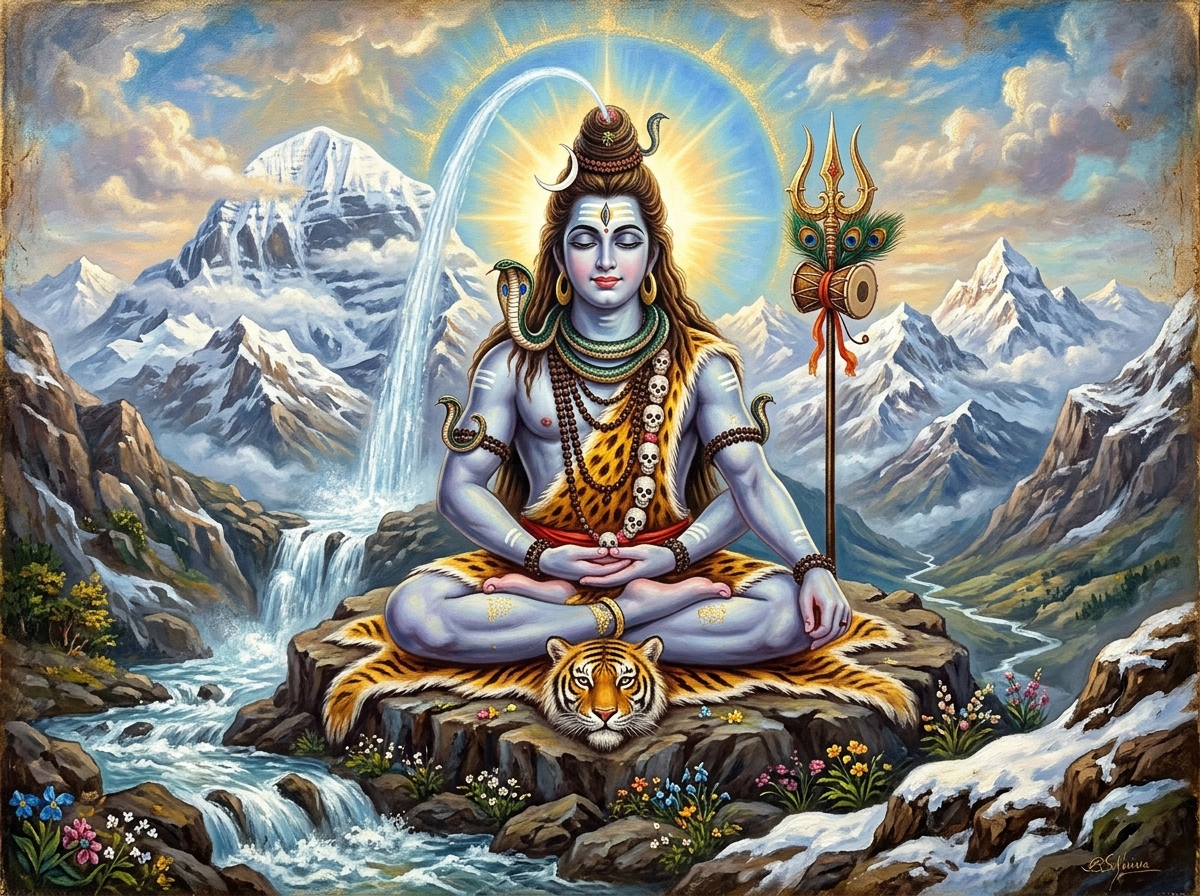
| Tryambakam | The three-eyed one — Lord Shiva |
| Yajāmahe | We worship, we adore, we honour |
| Sugandhim | The fragrant one; sweet-smelling, spiritually fragrant |
| Puṣṭivardhanam | He who nourishes and increases well-being and prosperity |
| Urvārukam iva | Like a ripe cucumber (urvāruka fruit) |
| Bandhanāt | From bondage; from the bondage of ignorance and death |
| Mṛtyoḥ | From death |
| Mukṣīya | May you liberate us |
| Mā | Not |
| Amṛtāt | From immortality; away from liberation |
Complete Meaning
We worship and adore the three-eyed Lord Shiva — the fragrant one who nourishes and sustains all beings. Just as a ripe cucumber naturally falls free from its vine when fully mature, so may He liberate us from the bondage of death, sin, and repeated rebirth — not to deprive us of immortality, but to grant it.
Origin & Significance
The Mahamrityunjaya Mantra appears in the Rigveda (7.59.12) and is also found in the Yajurveda and Atharva Veda. It is one of the oldest and most revered mantras in the entire Vedic tradition. The sage Markandeya is said to have discovered and taught this mantra to the world.
The name means literally:
- Maha = Great
- Mrityu = Death
- Jaya = Victory
It is called the Great Death-conquering Mantra because it is believed to bring the devotee victory over both physical death and the spiritual death of ignorance and rebirth.
When to Chant
- For healing: Recite 108 times daily during illness, for yourself or for a loved one
- For protection: Begin any important journey, business venture, or surgery
- For the dying: Reciting near a dying person is believed to ease their passage
- Shraddha ceremonies: Offered for the peace of departed souls
- Mondays: Lord Shiva’s sacred day — most auspicious for this mantra
Benefits of Chanting
- Conquerors fear of death — physical and spiritual
- Promotes healing — traditionally used in Ayurvedic medicine and healing rituals
- Grants courage — removes deep-seated anxieties and existential fears
- Spiritual liberation — leads the soul toward moksha (final freedom)
- Protection from accidents — many devotees chant before travel
- Mental peace — calms the mind and reduces stress
Method of Chanting
Best time: Before sunrise (Brahma Muhurta) or any time with sincere devotion
Posture: Sit facing north or east; spine erect
Mala: Use a rudraksha mala (108 beads) — most auspicious for Shiva mantras
Duration: 11, 21, 51, or 108 repetitions per sitting
Offerings: Light a deepa (lamp) with ghee; offer bel leaves and white flowers to Lord Shiva’s image
Purifying practice: Before beginning, take a sip of water and resolve: “I chant this mantra for healing, protection, and liberation.”
The Story of Markandeya
The sage Markandeya was fated by the stars to die at age sixteen. As the emissaries of Yama (the lord of death) arrived to claim his life, Markandeya clung to the Shiva linga and chanted the Mahamrityunjaya Mantra with total surrender. Lord Shiva himself emerged from the linga and defeated Yama, granting Markandeya the boon of eternal youth. This mantra thus carries the living power of Shiva’s grace over death itself.
Phala Shruti (Fruit of Recitation)
Mrityor mukshiya maamritaat — these final words are themselves the promise: the sincere seeker shall be freed from the cycle of death and attain the nectar of immortality (amrita). This is not merely the freedom from physical dying, but the ultimate liberation of the soul from all illusion (maya).