
॥ Lalita Sahasranamam ॥
One Thousand Names of Goddess Lalita Tripurasundari
From the Brahmanda Purana — The Supreme Scripture of the Shakta Tradition
Introduction
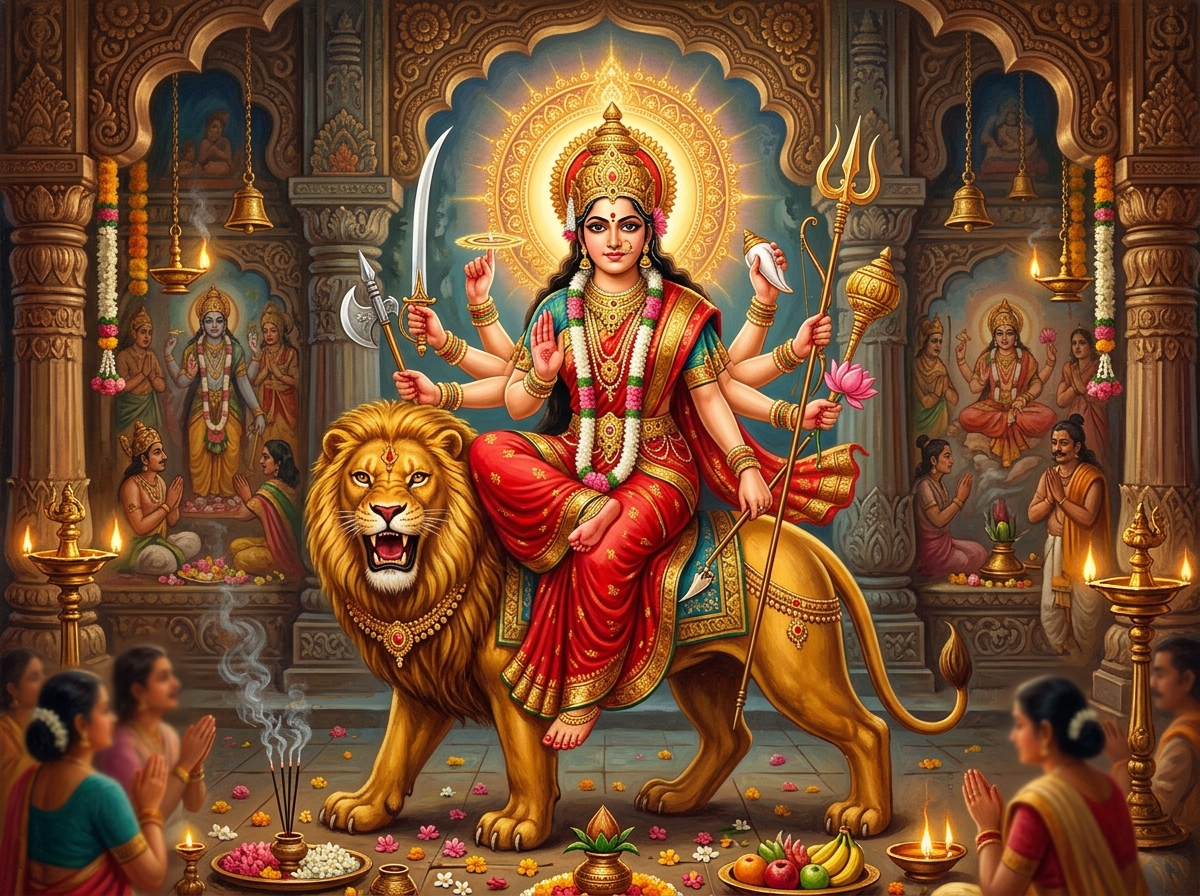
The Lalita Sahasranamam is considered the most sacred and comprehensive text of the Shakta tradition — the path of Divine Mother worship. It appears in the Brahmanda Purana and was first taught by the goddess Lalita Devi herself to the eight Vag Devi goddesses (the eight goddesses of speech), who then composed it as a thousand-verse prayer.
Unlike most Sahasranamas which are taught from one sage to another, the Lalita Sahasranamam is a self-declaration of the Goddess — she describes herself through a thousand names. This makes it the most intimate and revelatory of all sacred name-texts.
The Setting: Lalitopakhyana
Before the Sahasranama, the Brahmanda Purana tells the story of the Goddess’s cosmic battle with the terrible demon Bhandasura. After the victory, the Goddess was praised by all gods and sages. The eight Vag Devis — goddesses of the eight directions of speech — composed the Sahasranama as a hymn of praise and offered it to her.
The Goddess declared: “This Sahasranama, composed in my praise, shall be the supreme mantra text of all ages. Whoever reads it shall be freed from all afflictions and shall attain liberation.”
The Opening Dhyanam
Lalitāṃ Lakṣmīṃ ca vidyāṃ ca Pārvatīṃ parameśvarīm
Tulābhārāṃ ratnajaṭāṃ śyāmalāṃ brahmaśaktim
Meaning: We meditate on Lalita — the playful one, Lakshmi, the embodiment of knowledge, Parvati, the supreme ruler — adorned with jeweled matted locks, dark-complexioned, the power of Brahman.
The Phalashruti Opening
Goddess Lalita declared:
“Whoever wishes for their own well-being should listen to these names daily.”
Names 1–20: The First Names
Names 21–100: Key Names by Theme
Names of Her Cosmic Beauty (21-50)
These names describe the Goddess’s form in extraordinary poetic detail — her smile like the full moon, her teeth like jasmine buds, her speech more sweet than the nectar of immortality, her arms like the golden vine of the divine.
Names of Her Absolute Power (51-80)
Sarva-shakti-mayi (she who is all powers), Para (the supreme), Sakshi (the witness), Mokshada (giver of liberation), Muktida (bestower of freedom), Amritatmika (of the nature of immortality).
Names of Her Cosmic Role (81-100)
Adi-Shakti (primordial power), Brahma-Shakti (creative power), Vishnu-Shakti (preserving power), Shiva-Shakti (transforming power), Maha-Tripura-Sundari (the great, transcendent, beautiful one).
Names 900–1000: The Final Century
The last hundred names of the Lalita Sahasranamam constitute the most philosophically dense portion — describing the Goddess in her absolute, non-dual nature:
Sri Vidya — She is sacred knowledge itself
Para Brahma — She is the absolute reality
Parama Atma — She is the supreme Self
Sarva Avastha Vivarjita — Beyond all states of consciousness
Mana-adi Prapancha Rahita — Free from the constructs of mind
Sakshi — The eternal witness
Trikonamadhyavartini — Residing in the center of the triangle (of the Sri Yantra)
Maha Tripura Sundari — The final name: the supremely beautiful one who dwells in and transcends the three cities of existence.
The Sri Yantra Connection
The Lalita Sahasranamam is intimately connected with the Sri Yantra (also called Sri Chakra) — the geometric diagram that is the visual form of the Goddess. The 43 triangles of the Sri Yantra correspond to the 43 avarana deities (surrounding attendant goddesses), each of whom is described in the Sahasranama.
Chanting the Sahasranama while meditating on the Sri Yantra is considered the most complete form of Lalita Devi worship.
Method of Recitation
Best day: Friday (Shukravar); full moon nights; Navratri
Time: Morning between 4-8 AM or evening after sunset
Offerings: Red hibiscus flowers; sandalwood paste; kumkum; rose petals; honey; coconut
Mala: Sphatik (crystal) or coral mala
Duration: Full recitation takes approximately 45 minutes
Phala Shruti
The Goddess herself declares at the conclusion of the Sahasranama:
Idam hi paramam stotram, sarva stotrebhyaḥ uttamam
Lalitāyāḥ prīti karaṃ, sarva siddhi phala pradam
“This is the supreme praise — the best of all praises — most pleasing to Goddess Lalita, and bestowing all accomplishments and fruits.”
“Whoever recites even a single name from this Sahasranama is freed from all sins. Whoever recites all one thousand names daily for a year shall attain the highest state — becoming one with the Goddess herself.”
The Sahasranama ends with the beautiful declaration that the relationship between the devotee and the Goddess is ultimately a relationship between the individual self and the universal Self — and that the goal of all these thousand names is to dissolve the apparent boundary between them.