
॥ Vakratunda Mahakaya ॥
Vakratuṇḍa mahākāya sūryakoṭi samaprabha
Nirvighnaṃ kuru me deva sarvakāryeṣu sarvadā
Word-by-Word Meaning
| Sanskrit | Meaning |
|---|---|
| Vakra | Curved, bent |
| Tuṇḍa | Trunk, snout |
| Mahākāya | Having a great body (maha = great; kāya = body) |
| Sūrya | The sun |
| Koṭi | Ten million; a crore |
| Samaprabha | Equal in radiance (sama = equal; prabha = radiance) |
| Nirvighnam | Without obstacles (nir = without; vighna = obstacle) |
| Kuru | Make, do, grant |
| Me | For me, to me |
| Deva | Divine Lord, God |
| Sarva | All |
| Kāryeṣu | In works, in endeavours |
| Sarvadā | Always, at all times |
Complete Meaning
O Lord Ganesha — you who have a curved trunk, a mighty and magnificent body, and whose radiance equals the brilliance of ten million suns — O Divine Lord, always remove all obstacles from all my endeavours.
The Deeper Meaning of Each Line
“Vakratunda” — The curved trunk of Ganesha is not a defect but a symbol of profound intelligence. The elephant uses its curved trunk with extraordinary precision — it can uproot a tree or pick up a single needle. The curved path is often the wiser path; going around an obstacle is sometimes wiser than forcing through it.
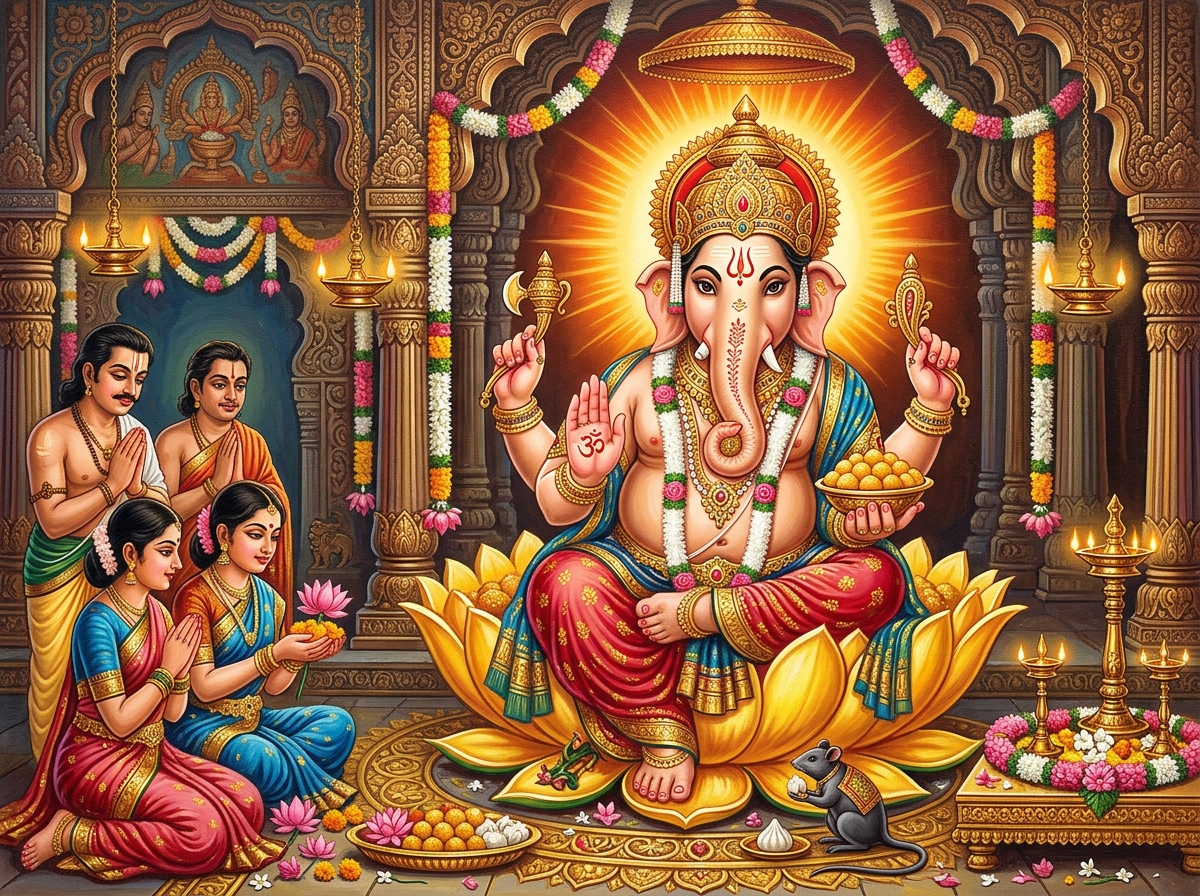
“Mahakaya” — The great body of Ganesha contains the cosmos. The elephant is the largest land animal — symbol of immovable strength. But Ganesha’s body is also said to contain the universe: his head encompasses the sky, his belly the earth, his trunk the Milky Way. He is small enough to ride a mouse and large enough to encompass all creation.
“Suryakoti Samaprabha” — Ten million suns. This is the light of pure consciousness — Chit Shakti — which illuminates the mind from within. Every act of understanding, every moment of clarity, every creative inspiration — this is Ganesha’s radiance at work.
“Nirvighnam kuru me deva sarvakaryeshu sarvada” — Note the completeness of the request: all endeavours (sarva karyeshu), always (sarvada). The devotee asks not for success in one thing but for a life cleared of obstacles in all righteous directions.
The Symbolism of Ganesha
| Symbol | Spiritual Meaning |
|---|---|
| Elephant head | Supreme intelligence and cosmic memory |
| Large ears | Willingness to listen; hearing the subtle within the gross |
| Small eyes | Concentration; one-pointed focus |
| Single tusk | Unity of consciousness; the choice between good and better |
| Large belly | Digestive power — digesting all of life’s experiences equally |
| Mouse vehicle | Control over the restless mind (mouse = desire) |
| Modak in hand — The sweetness that awaits the disciplined seeker |
The Second Popular Ganesha Shloka
Gajānanaṃ bhūtagaṇādisevitaṃ
Kapitthjambūphalasāra bhakṣaṇam
Umāsutaṃ śokavināśa kāraṇaṃ
Namāmi vighneśvarapādapaṃkajam
Meaning: I bow to the lotus feet of Lord Vighneshvara — the elephant-faced one, served by all divine beings; the one who savours the essence of the kapittha and jambu fruits; the son of Uma (Parvati); the cause of the destruction of all sorrow.
When to Recite
- Before beginning any task — before starting work, studies, travel, or a project
- At the beginning of prayers — Ganesha is always invoked first in all Hindu rituals
- Ganesha Chaturthi — the birthday of Lord Ganesha (Bhadrapada Shukla Chaturthi)
- Wednesday — Ganesha’s sacred day
- When facing obstacles — recite 21 times and visualize the path clearing before you
Phala Shruti
Nirvighnam bhava sarvatra, Ganesha pada sevakah
Siddhi prapto mahabhagas, tava prasadat Keshava
“One who serves at the feet of Lord Ganesha shall be free from all obstacles everywhere. Through his grace, one attains all accomplishments and great good fortune.”