
॥ Guru Vandana ॥
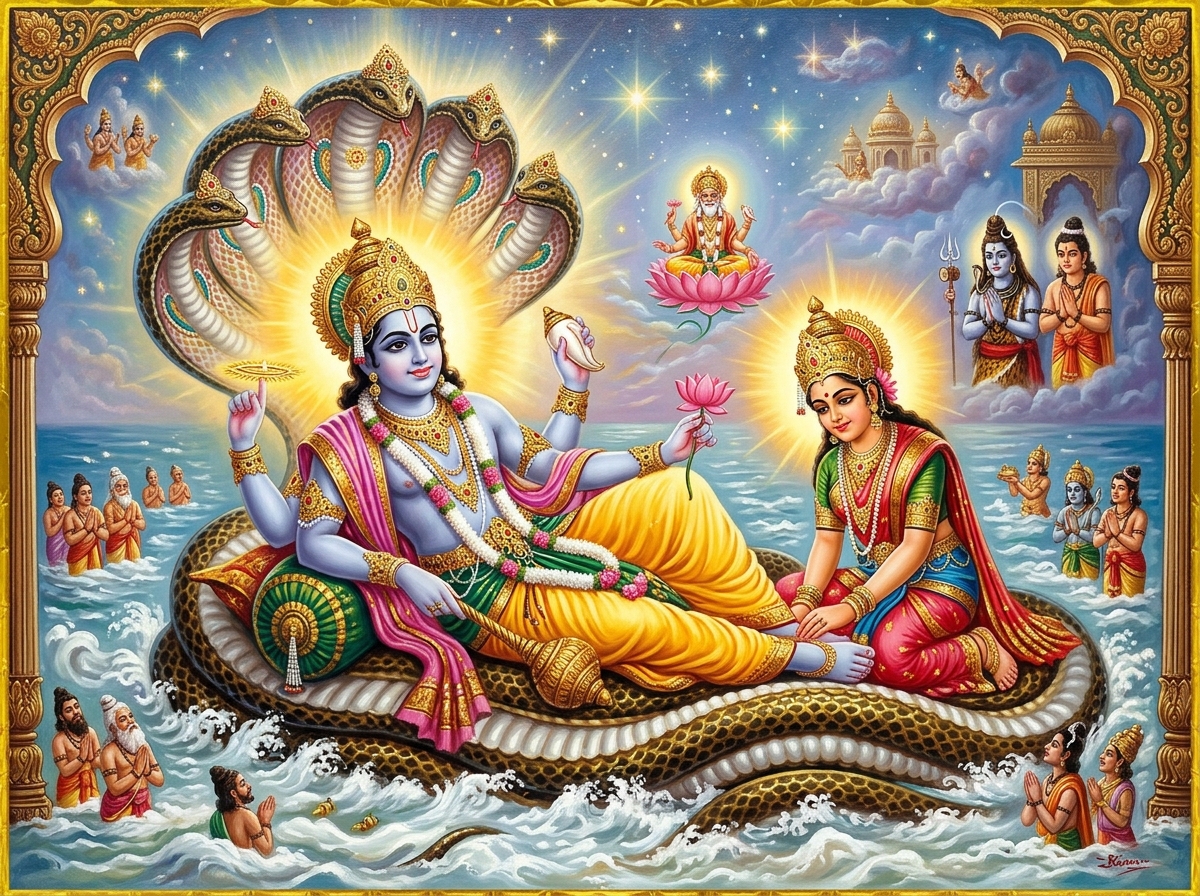
Gurur brahmā gurur viṣṇu gurur devo maheśvaraḥ
Guru sākṣāt paraṃ brahma tasmai śrī gurave namaḥ
Word-by-Word Meaning
| Sanskrit | Meaning |
|---|---|
| Gurur | The Guru (spiritual teacher) |
| Brahmā | Lord Brahma — the creator of the universe |
| Vishnu | Lord Vishnu — the sustainer of the universe |
| Gurur devo Maheshvarah | The Guru is the divine Lord Shiva — the transformer |
| Guru sākṣāt | The Guru is directly, visibly |
| Paraṃ Brahma | The supreme, absolute reality |
| Tasmai | To that one |
| Śrī Gurave | To the glorious Guru |
| Namaḥ | I bow, I offer reverence |
Complete Meaning
The Guru is Brahma (the creator — through knowledge, the Guru creates a new being in the student). The Guru is Vishnu (the sustainer — through grace, the Guru maintains the student on the path). The Guru is the great Lord Shiva (the transformer — through wisdom, the Guru destroys the student’s ignorance). Indeed, the Guru is the Supreme Absolute Reality (Para Brahma) directly before our eyes. To that glorious Guru, I bow.
The Threefold Role of the Guru
The verse captures the three functions of a true spiritual teacher:
As Brahma (Creator):
The guru creates the student’s second birth — the spiritual birth. While the physical parents give us a body, the guru gives us our true spiritual life. In Sanskrit, this is called the Dvija (twice-born) — the first birth is physical, the second is spiritual, conferred by the guru’s knowledge.
As Vishnu (Sustainer):
The guru sustains the student through years of doubt, struggle, and difficulty. Just as Vishnu maintains the universe through his grace, the guru maintains the student’s spiritual practice through encouragement, correction, and unconditional care.
As Shiva (Destroyer):
The guru destroys what is false in the student — the ego, the illusions, the wrong understanding. This is the most difficult work of the guru and the most valuable gift.
Why is the Guru Called “Para Brahma”?
In the Vedantic tradition, Para Brahma is the highest reality — the infinite, self-luminous consciousness that underlies all existence. How can a human being be identified with this?
The answer: the guru is not the body or the personality, but the awareness that shines through the teacher. When a true guru teaches, it is not a human speaking — it is the universal consciousness illuminating itself through the teacher’s form. The student who looks through the outer form and recognizes this receives the deepest teaching.
The great Upanishadic declaration: Tat tvam asi (“You are that”) — when the guru speaks these words and the student truly hears them, the guru is indeed Para Brahma speaking to Para Brahma.
The Second Guru Shloka
Ajñānatimirāndhasya jñānāñjanaśalākayā
Cakṣurunmīlitaṃ yena tasmai śrīgurave namaḥ
Meaning: To that guru who, with the salve of knowledge applied with the stick of wisdom, has opened the eyes of one who was blinded by the cataract of ignorance — to that Shri Guru, I bow.
The metaphor is precise: spiritual ignorance is like a cataract that prevents the eye of the mind from seeing clearly. The guru’s knowledge is like medicinal eye-drops that dissolve the cataract and restore sight.
When to Recite
- Every morning — as the first prayer of the day, before any other mantra
- Before studying scripture — acknowledging the guru lineage through which knowledge flows
- Before meditation — invoking the guru’s grace to guide one’s practice
- Guru Purnima — the full moon of the month of Ashadha, dedicated to honouring one’s teacher
- At the beginning of any learning — music, dance, scripture, or any art
The Guru Lineage (Guru Parampara)
In Hindu tradition, knowledge flows in an unbroken lineage (parampara) from teacher to student across generations. This is why we do not merely honour our immediate teacher but the entire chain:
Brahma > Vishnu > Shiva > Rishis > Manus > Sages > Teachers > Present Guru
When we bow to the guru, we bow to this entire river of transmitted wisdom that stretches back to the primordial divine teachers.
Phala Shruti
Gurumabhyarcya dharmena, śrutena śīlena eva ca
Sarva pāpam vyapohyante, brahmalokam ca gacchati
“By honouring the Guru through righteousness, learning, and good conduct, all sins are washed away and the devotee attains the realm of Brahman.”