
॥ Karagre Vasate Lakshmi ॥
The Morning Hand Prayer
Karāgre vasate Lakṣmī, karamadhye Sarasvatī
Karamūle tu Govindaḥ prabhāte karadarśanam
Word-by-Word Meaning
| Sanskrit | Meaning |
|---|---|
| Kara | Hand, palm |
| Agre | At the tip, at the front |
| Vasate | Dwells, resides |
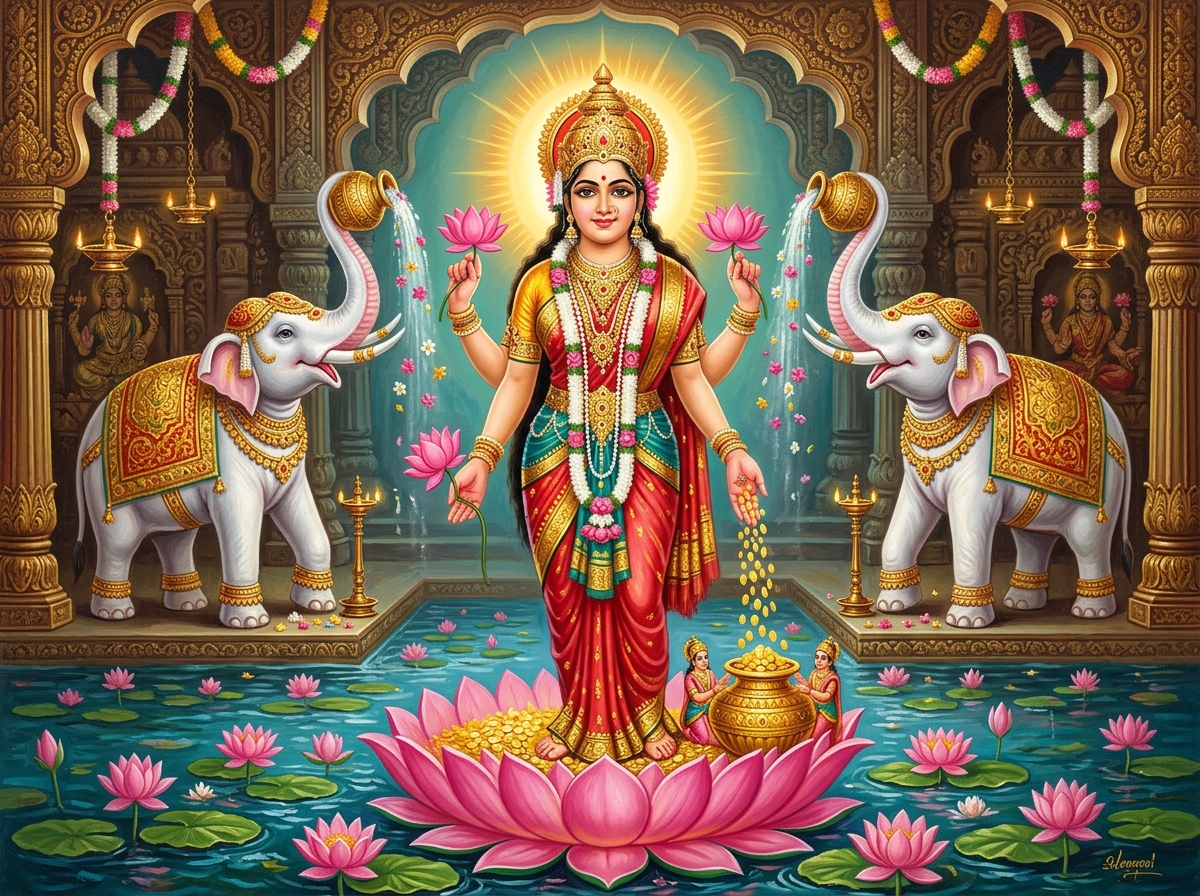
| Lakṣmī | Goddess of prosperity and grace |
| Madhye | In the middle |
| Sarasvatī | Goddess of wisdom and learning |
| Mūle | At the root, at the base |
| Tu | Indeed |
| Govindaḥ | Lord Vishnu (Govinda — he who is known through the Vedas and who protects the earth) |
| Prabhāte | In the morning |
| Karadarśanam | The sight (darshan) of one’s own hands |
Complete Meaning
At the tip of the hand dwells Goddess Lakshmi. In the middle of the hand dwells Goddess Saraswati. At the root of the hand dwells Lord Govinda (Vishnu). Therefore, in the morning, one should look at one’s hands (with this understanding).
The Practice: Upon Waking
In the Hindu tradition, the very first act upon waking each morning is this: look at your own hands.
Do not immediately reach for your phone, jump out of bed, or think of the day’s problems. First, in the stillness of waking, bring your joined palms before your face and recite this shloka.
By doing so, you are:
- Acknowledging that your hands are sacred — they carry three divine presences
- Setting an intention — that today’s work will bring prosperity (Lakshmi), wisdom (Saraswati), and divine grace (Govinda)
- Dedicating the day — before the self-centred mind fully awakens, this moment of offering dedicates the day to the Divine
The Symbolism of the Three Regions
Tips of the fingers — Lakshmi:
The fingertips are where we reach out and touch the world. What we reach for, grasp, give, and receive — all this is governed by Lakshmi. She is the quality of grace in our transactions with the world: not merely material wealth but the quality of what we attract and what we offer.
Middle of the palm — Saraswati:
The centre of the palm is where we hold and carry things — including ideas, knowledge, and creative works. Saraswati in the centre means that knowledge is at the heart of all our actions. Whatever we do should flow from understanding, wisdom, and discernment.
Root of the palm — Govinda:
The base of the palm, where it connects to the wrist and then the arm, represents the foundation of all action. Govinda (Vishnu) at the root means that the divine is the ultimate source and ground of all our activity. Without his sustaining grace, nothing we do can be maintained or bear fruit.
The Second Morning Shloka: Earth Prayer
Samudravasane devi parvata stanamaṇḍale
Viṣṇupatni namastubhyaṃ pādasparśaṃ kṣamasva me
Meaning: O Goddess Earth, who is clad in the garments of the ocean and whose breasts are the mountains — O consort of Lord Vishnu — I bow to you! Please forgive me for touching you with my feet.
This prayer is recited when you first put your feet on the ground in the morning. It acknowledges that the earth is not an inert substance but a living goddess — and that simply by walking, we disturb her. The prayer asks forgiveness and expresses gratitude.
The Morning Prayer Sequence
The ideal Vedic morning begins with three shlokas in sequence:
- Upon waking (still lying down): Recite the morning intention prayer
- Hands before eyes: Karagre Vasate Lakshmi — see the divine in your hands
- Feet touching ground: Samudravasane Devi — ask forgiveness of the earth
- Looking in the mirror: Om namo Narayanaya — recognizing the divine in yourself
This entire sequence takes less than three minutes, but it transforms the quality of the entire day that follows.
Why This Practice Matters
In our current culture, we are conditioned from childhood to see ourselves as biological machines — our hands as mechanical tools for productive output. This shloka offers a radical alternative vision: your hands are temples of divine power.
The prosperity you create with your hands flows from Lakshmi. The knowledge you apply flows from Saraswati. The sustaining grace that makes it all possible flows from Govinda. When you know this in your bones, you work differently — with more care, more creativity, more gratitude, and less ego.
Phala Shruti
Prabhāte kara darśanaṃ yaḥ karoti naro nityam
Tasya dāridryaṃ nāsti, tasya śrīr bhavati sadā
“One who looks at their hands in the morning with this prayer — poverty never touches them, and divine grace (Shri) remains with them always.”