
॥ Shiva Tandava Stotram ॥
Composed by Ravana, the great scholar-king of Lanka, as an act of surrender to Lord Shiva
Verse 1
Jaṭāṭavīgalajjalapravāhapāvitasthale
Gale’valambya lambitāṃ bhujaṃgatuṃgamālikām
Damaḍḍamaḍḍamaḍḍamam nināda vaḍḍamarvayaṃ
Cakāra caṇḍatāṇḍavaṃ tanotun naḥ śivaḥ śivam
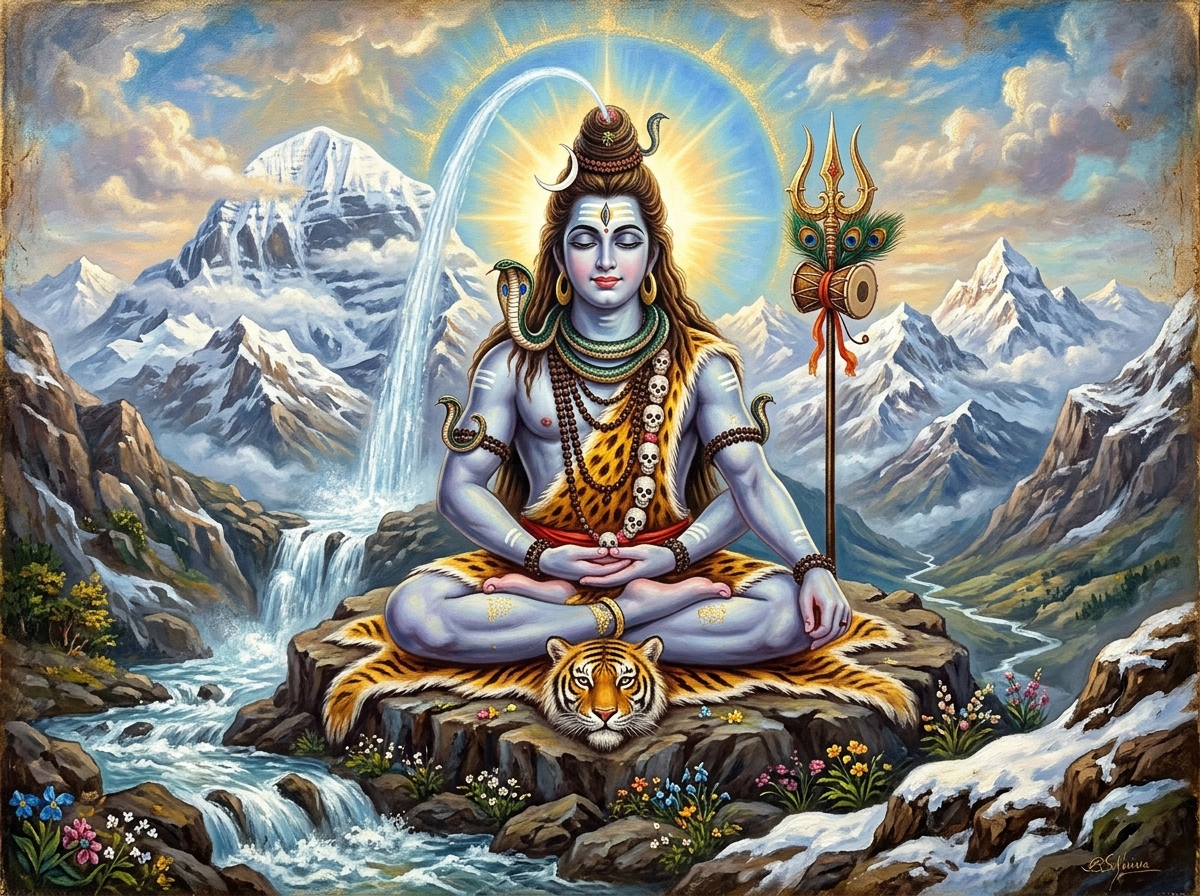
Meaning: From whose knotted hair flows the sacred Ganga, purifying his neck; from whose throat hangs a magnificent serpent garland; to the thunderous rhythm of the Damaru drum — may that Lord Shiva, who performs the fierce Tandava dance, bestow well-being upon us!
Verse 2
Jaṭākaṭāhasaṃbhramabhramam nilimpanirjharī
Vilolавīcivallari virājamānamūrdhani
Dhagaddhagaddhagajjvalal lalāṭapaṭṭapāvake
Kiśoracandraśekhare ratiḥ pratiksaṇaṃ mama
Meaning: In whose matted locks swirls the divine Ganga in ecstatic spirals; on whose head the rippling waves of the celestial river dance with grace; whose forehead blazes with the roaring cosmic fire — in that Shiva adorned by the crescent moon, I take refuge and delight every moment.
Verse 3
Dharādharendranandanīvilāsabandhubandura
Sphuraddigantasantatipramodamānamānase
Kṛpākaṭākshadhoran̐ī niruddhadurdharāpadi
Kvaciddigambare mano vinodametu vastuni
Meaning: Whose heart rejoices in the pleasure of Parvati (daughter of the mountain king); whose compassionate glance removes all unbearable difficulties — in such a sky-clad Lord Shiva, may my mind ever find its delight.
Verse 4
Jaṭābhujaṃgapiṃgalasphurat phaṇāmaṇiprabhā
Kadambakuṃkumadravapraliptadigvadhūmukhe
Madāndhasindhura sphurat tvaguttarīyamedure
Mano vinodamadbhutaṃ bibhartu bhūtabhartari
Meaning: The gems on the hood of the tawny serpent entwined in his locks cast a golden glow on the faces of the directions (like celestial maidens); his upper garment is the dripping hide of an intoxicated elephant — may my mind find wondrous delight in this Lord, the master of all living beings.
Verse 5
Sahasralocanaprabhṛtyaśeṣalekhaśekhara
Prasūnadhūlidhoran̐ī vidhūsarāghripīṭhabhūḥ
Bhujaṃgarājamālayā nibaddhajāṭajūṭakaḥ
Śriyaicarāyajāyatāṃ cakorabandhusekharaḥ
Meaning: Whose lotus feet are powdered with pollen from the garlands of Indra (thousand-eyed) and all other gods; whose matted locks are bound by the king of serpents; and who wears the crescent moon — may that Lord long bestow his grace and abundance upon us.
Verses 6–10 (Summary)
In the remaining verses, Ravana describes:
- Shiva’s cosmic drum (Damaru) creating the sounds of the universe
- His terrible laughter that dissolves mountains
- The fire burning on his forehead, illuminating all three worlds
- The Ganga flowing from his matted hair, purifying the cosmos
- His all-pervading consciousness that contains both creation and liberation
Origin: Ravana’s Surrender
This stotra was composed by Ravana — the scholar-king of Lanka who possessed the knowledge of all Vedas and Shastras, but whose ego and desire for power became his downfall. When he lifted Mount Kailash to prove his power, Shiva simply pressed down his toe — and Ravana was trapped.
In that moment of complete helplessness, all of Ravana’s pride dissolved. He began to compose this magnificent hymn, praising Shiva’s glory with the full power of his literary genius. Shiva, moved by the beauty and sincerity of the hymn, released Ravana and gave him the famous Chandrahas sword.
The spiritual lesson is profound: even the mightiest ego, when it surrenders before the Lord, becomes the greatest hymn.
The Spiritual Meaning of Tandava
Tandava is Lord Shiva’s cosmic dance — a dance that simultaneously represents:
| Movement | Cosmic Act |
|---|---|
| Right foot down | Suppression of ignorance (Apasmara Purusha) |
| Left foot raised | Liberation offered to the seeker |
| Upper right hand (Damaru) | Sound — creation of the universe |
| Upper left hand (Fire) | Dissolution of all things |
| Lower right hand (Abhaya) | Protection and grace |
| Lower left hand (pointing to raised foot) | The path to liberation |
Shiva’s dance is not a performance — it is the ongoing rhythm of the cosmos itself.
Phala Shruti
Iti śrī rāvaṇa viracitaṃ śivatāṇḍavastotraṃ sampūrṇam
“This is the complete Shiva Tandava Stotram composed by Ravana. Whoever reads or recites this stotra with devotion obtains the blessings of Lord Shiva — courage, eloquence, liberation from sin, and ultimately, liberation from the cycle of birth and death.”