
॥ Shri Suktam ॥
A sacred hymn to Goddess Lakshmi from the Rigveda — among the oldest and most powerful texts for invoking divine abundance
Verse 1
Om Hiraṇyavarṇāṃ hariṇīṃ suvarṇarajatasrajām
Candrāṃ hiraṇmayīṃ Lakṣmīṃ jātavedo ma āvaha
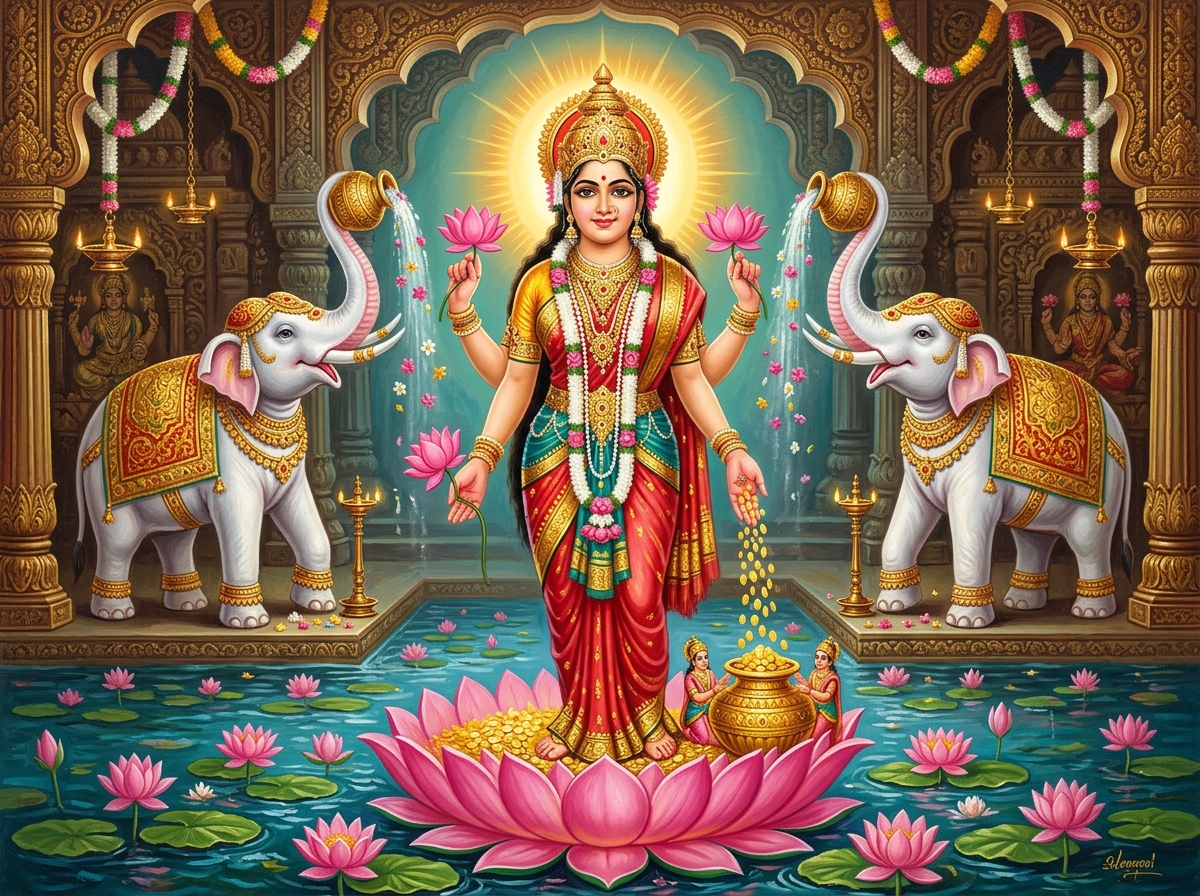
Meaning: O Agni (Jataveda — the all-knowing fire), invoke for me that Lakshmi who is golden-hued, who is as graceful as a deer, adorned with garlands of gold and silver, who is like the moon in her beauty, who is luminously golden — bring her to me!
Verse 2
Tāṃ ma āvaha jātavedo lakṣmīmanapagāminīm
Yasyāṃ hiraṇyaṃ vindeyaṃ gāmaśvaṃ puruṣānaham
Meaning: O Jataveda (Agni), bring to me that Lakshmi who never leaves; through whose presence I may obtain gold, cattle, horses, and noble people — all the forms of abundance and support.
Verse 3
Aśvapūrvāṃ rathamadhyāṃ hastināda prabodhiniṃ
Śriyaṃ devīmupahvaye śrīrmā devī juṣatāṃ
Meaning: I invite the Goddess Shri — who is preceded by horses, accompanied by chariots in the middle, and awakened by the trumpeting of elephants — may the Goddess of divine grace be pleased with me!
Verse 4
Kāṃ sosmitāṃ hiraṇyaprākāramārdrāṃ jvalantīṃ tṛptāṃ tarpayantīm
Padme sthitāṃ padmavarṇāṃ tāmihopahvaye śriyam
Meaning: I invite here that Goddess Shri who smiles gently, who is surrounded by radiant golden light, who is moist and tender (with compassion), who blazes with spiritual fire, who is herself complete and she who completes others, who stands on the lotus, whose color is that of the lotus.
Verse 5
Candrāṃ prabhāsāṃ yaśasā jvalantīṃ śriyaṃ loke devajuṣṭāmudārām
Tāṃ padminīmīṃ śaraṇamahaṃ prapadye alakṣmīrme naśyatāṃ tvāṃ vṛṇe
Meaning: I take refuge in the moon-like, luminous Goddess Shri who blazes with fame, who is worshipped by the gods in this world, who is magnanimous and generous — O Goddess of the lotus, I choose you as my refuge; may all poverty and ill-fortune be destroyed by your grace!
Verses 6–15 (Summary of Key Themes)
The remaining verses of the Shri Suktam elaborate on:
- The sacred fragrance of Lakshmi — sandalwood, lotus, and all sweet fragrances
- Her gold and riches — both outer wealth and the inner richness of virtue
- Her connection to food and nourishment — Dhanya Lakshmi, the grain goddess
- Removal of poverty — “Alakshmi” (ill-fortune) is specifically banished
- Her lotus habitat — the lotus is both her seat and her symbol of purity
- Her cosmic role — sustaining the universe through divine grace (Anugraha Shakti)
The Meaning of “Shri”
Shri is one of the most sacred and comprehensive Sanskrit words:
- Sha — wealth, prosperity
- Ra — light, brilliance
- Ee — the divine feminine, grace
Together, Shri means radiant divine grace — a quality that encompasses beauty, goodness, prosperity, and spiritual light all at once. When we write “Shri” before a name, we invoke this quality upon that person or deity.
When to Recite Shri Suktam
- Diwali — the primary Lakshmi festival; recite the full Shri Suktam during Lakshmi Puja
- Fridays — Lakshmi’s sacred day
- Kojagara Purnima — the full moon of Ashwin month when Lakshmi roams the earth
- Every morning — even a few verses at sunrise invite divine grace into the day
- New business ventures — invoke Lakshmi’s blessing before any new financial undertaking
Method of Recitation
Time: Early morning or evening during Pradosh Kaal
Facing: East during morning; west during evening
Offerings: Lotus flowers, red roses, jasmine; kheer (rice pudding); honey; gold or silver coins placed before the image
Lamp: Ghee lamp with five wicks (Panchadip)
After recitation: Distribute prasad to family members and donate something to the poor
Phala Shruti (The Fruit of Recitation)
Ya evaṃ veda so’śriyaṃ jahāti na pāpacintā kurute
Na pāpakarma karoti sa śriyam āpnoti sa śriyam āpnoti
“One who knows and recites this hymn abandons poverty. Such a person does not think sinful thoughts, does not perform sinful acts — they obtain Shri, they obtain Shri (divine grace).”
The final verse of the Shri Suktam promises: “May Lakshmi, mother of the lotus, never leave my home. With this mantra I take refuge in the radiant, immortal Shri — the cosmic grace that sustains all life.”